Herculan
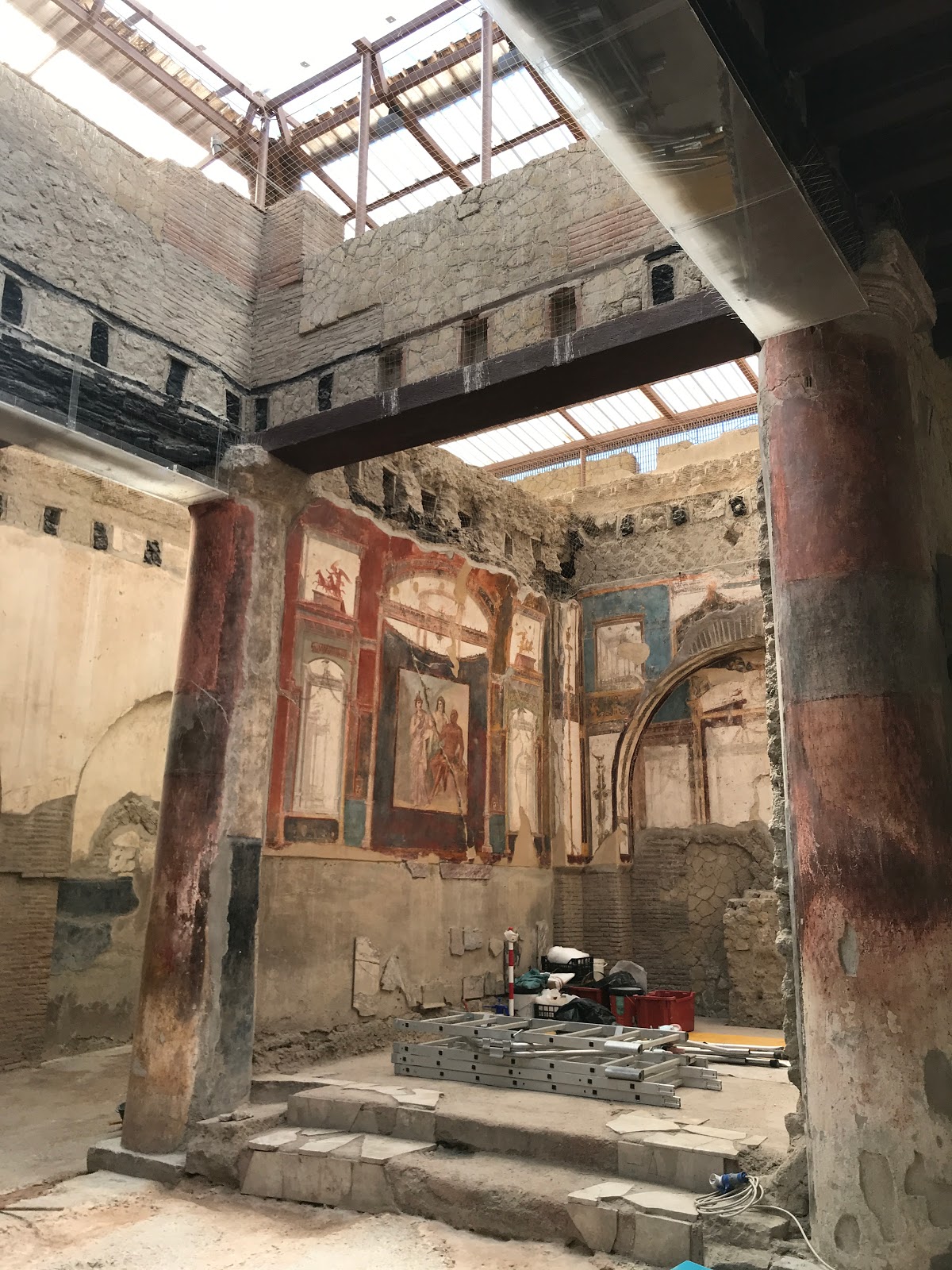 Terme SuburbaneThe suburban hot springs, the best preserved, date from Sg. I AD and were built between the walls of the city and the sea. It is possible to distinguish the praefurnium, the oven to heat the water, and the thermal rooms: Frigidarium, Tepidarium and Caldarium. |
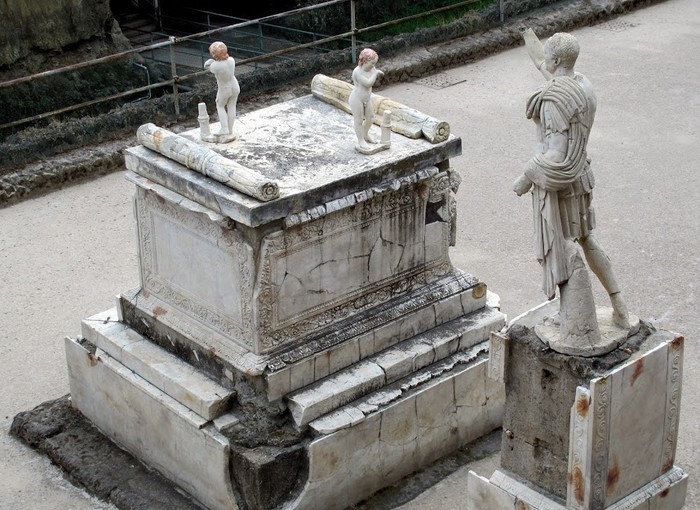 Ara de Marco Nonio BalboHere is a marble funeral altar in honor of Senator Marco Nonio Balbo, pretor and proconsul of the province of Crete and Cirene, tribune of the plebe in the year 32 BC. C. This senator was patron of the city of Herculano and ordered to build numerous public buildings for it. For this reason, at least ten statues were erected to him and at his death, he was given great honors, as recorded in an inscription of this altar. At the marble base, on the side of the altar, was the statue with a shell of Nonio Balbo himself. His head was discovered during A. Maiuri's excavations. |
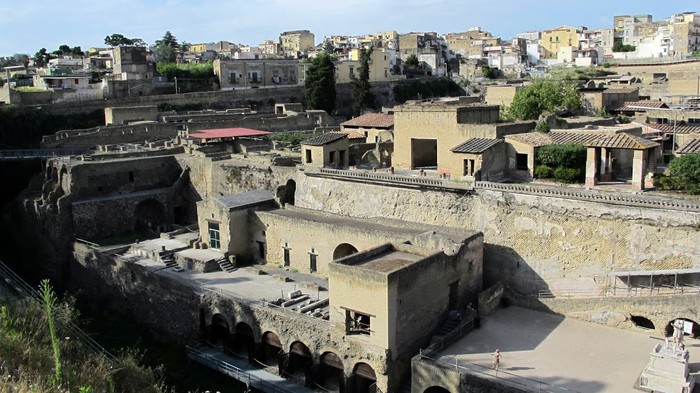 Fornicis or port warehousesThe Fornicis, are vaulted structures located opposite the sea that served as port warehouses to guard the fishing boats. This is where, in 1980, about three hundred human skeletons were found, as it is thought that during the eruption many of the city's inhabitants tried to take refuge in them with their most valuable objects, although they were finally intoxicated by the gases and high temperatures. |
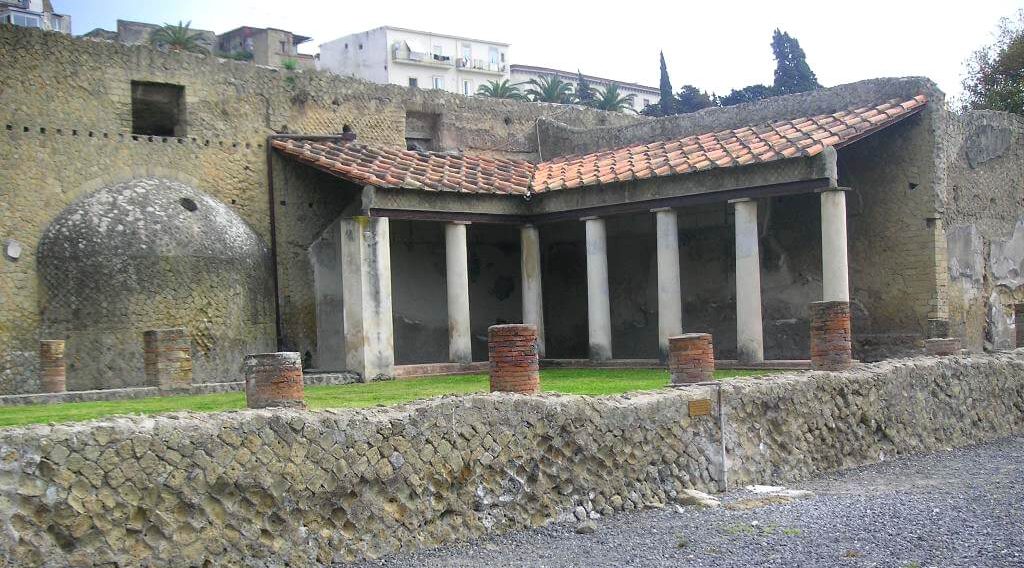 GymThe Palestra or Gym was built in the time of Julio Cesar and was dedicated to sports activities, in it stands out its monumental hall surrounded by columns as well as the cruciform pool with a bronze fountain representing the Hydra de Lerna, the mythical seven-head snake. |
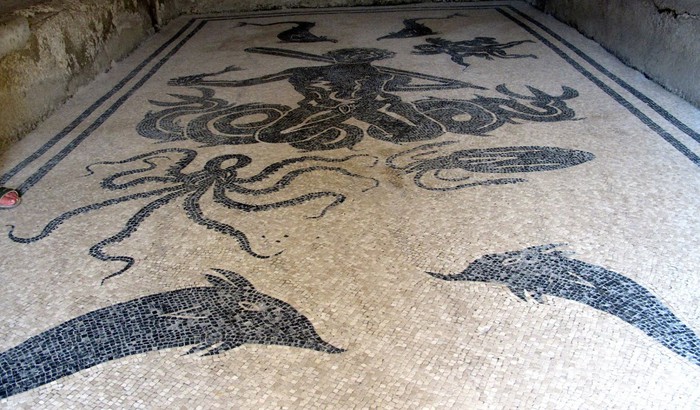 Women's hot springsThey are accessed by cardo IV. After a waiting room with building banks attached to the walls, you will find the wardrobe (apodyterium), whose canyon vault is decorated with wavy stries. Here is the mosaic with the Triton. Below is the warm room with shelves to keep the clothes. The floor is a mosaic with meandros. The hot room, with a vaulted deck, has two sumptuous seats, one of white marble and the other of red. Behind these rooms are the furnaces where the water was heated and the well that allowed the water to be collected at 8.25 meters deep. The south side of the hot springs connects with the Palestra through an open courtyard, surrounded by porticos whose brick columns are covered with stucco. |
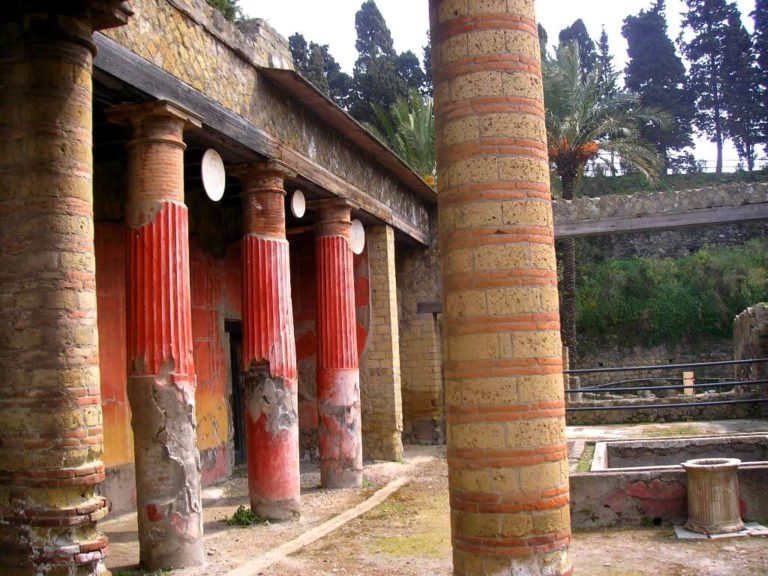 Villa de los PapyrosAmong all the private houses, the so-called Villa de los Papyros is the most famous and luxurious. It was ordered to be built by Lucio Calpurnio Pison Cesonio, father-in-law of Julio Cesar. Its name derives from the discovery in the house of a library with 1785 rolls of carbonized papyrus. |
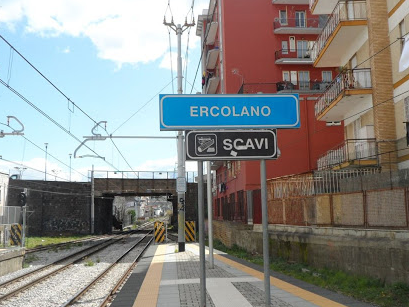 Ercolano ScaviStart of the visit at the train station. |
In a excavation area much smaller than Pompeya, walking through Herculano will be a very comfortable visit to carry out and very rewarding in the interesting corners to discover.
Σύνδεσμοι:wikiloc.com
Γεωγραφικό πλάτος:40.808864·Γεωγραφικό μήκος:14.354160