Paseo por Pompeya
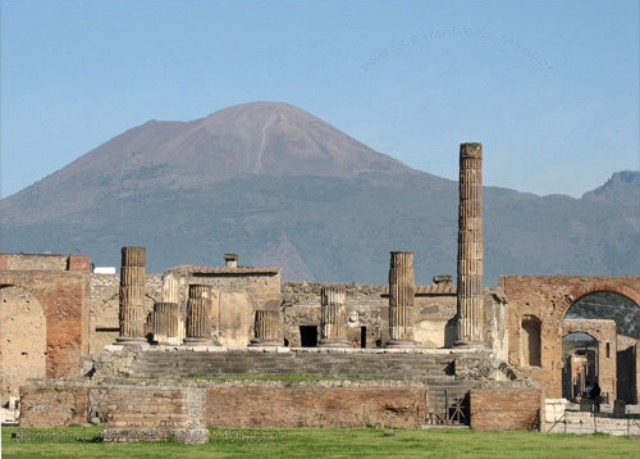 Temple of Venus4.8It is probably one of the worst preserved buildings in Pompeya, so your visit is not one of the most frequented. |
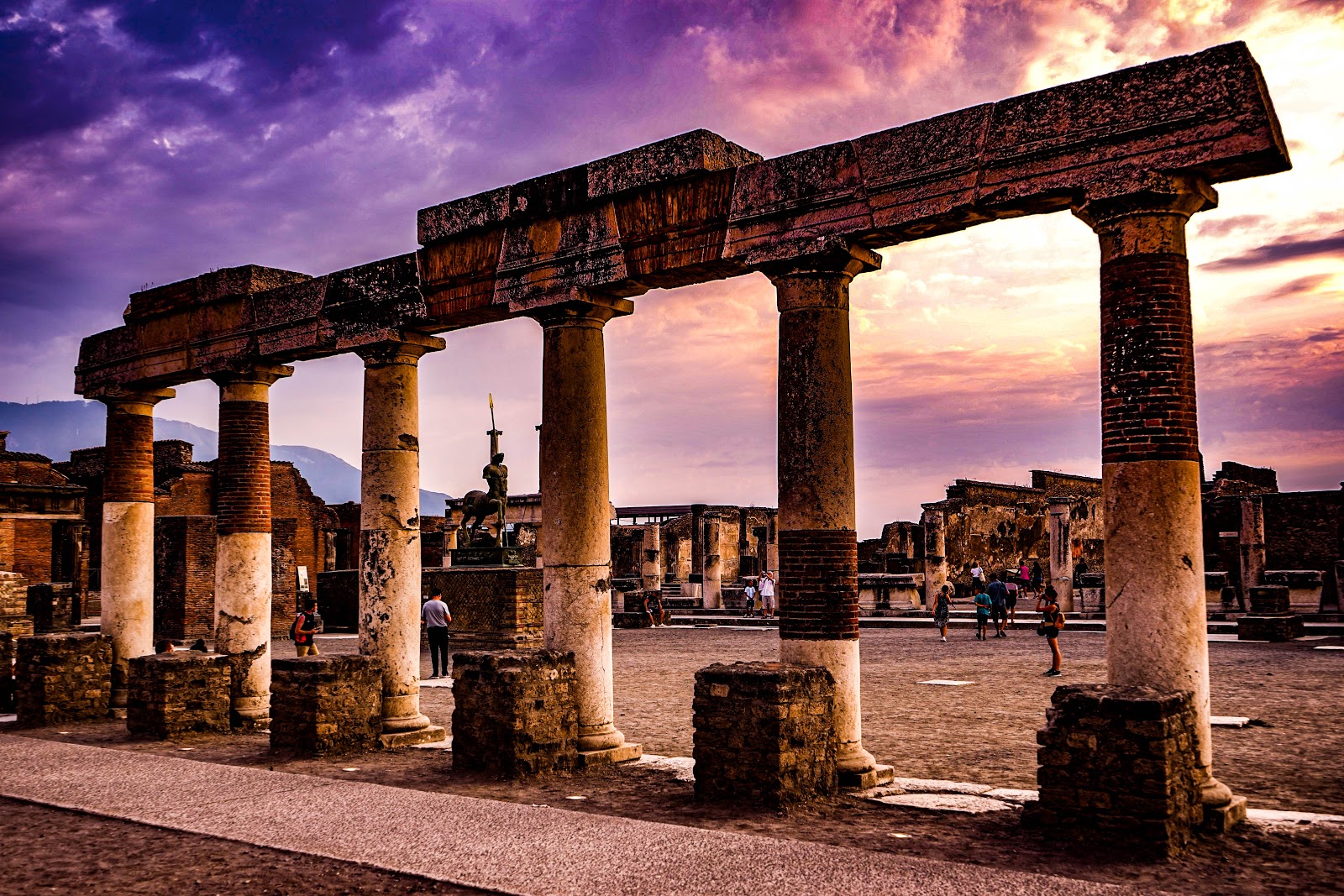 Temple of Jupiter4.8The Temple of Jupiter, Capitolium, or Temple of the Capitoline Triad was a temple of the Roman city of Pompeii in Italy. At first this temple was dedicated only to Jupiter, it was built in the middle of the 2nd century BC at the same time that it was worked in the temple of Apollo this was the time when the Roman influence on Pompey was at its peak and so the Roman Jupiter defeated the Greek Apollo and Jupiter (Juno and Minerva) in the cities recently taken by the Romans. This was also true for Pompey, where the Temple of Jupiter that was already there was expanded and became more Roman when the Romans took control. |
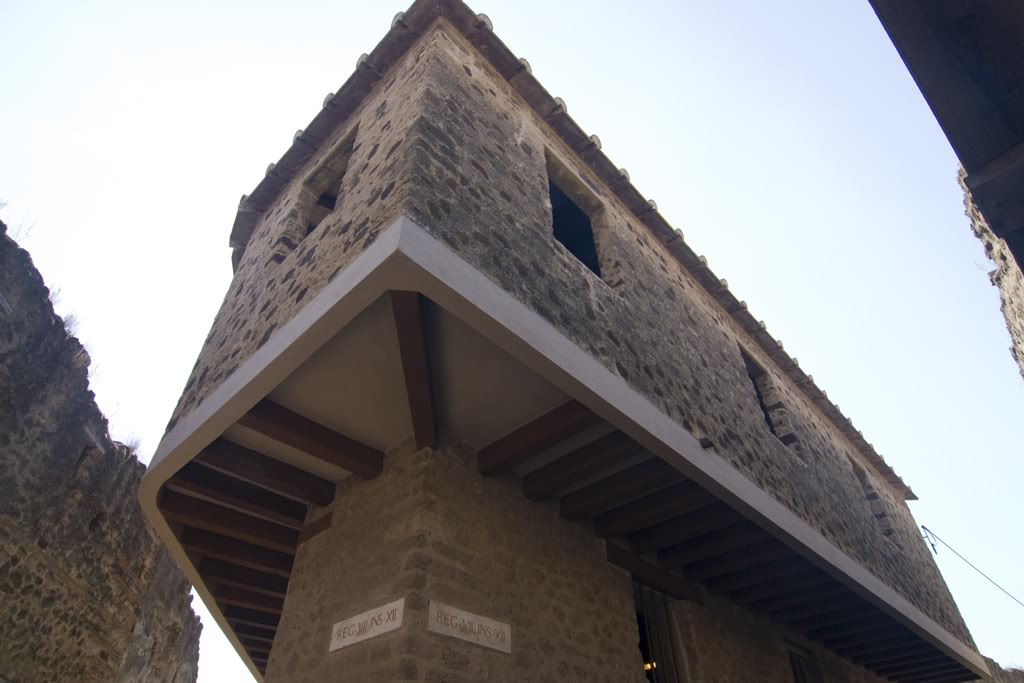 Lupanar4.7It is a two-storey building with a large L-shaped balcony on the upper floor. The main door, located in the Vicolo del Lupanar, leads to a central corridor with five rooms (cellae meretriciae) on each side, small, poorly ventilated and without intimacy, in which stands out the stone bed attached to the wall, which was covered with a mattress of wool or skins to make use of it more comfortable; it is possible that these rooms also have some table or some type of lamparilla, in addition to some water for personal toilet. In the walls it is still possible to see the inscriptions left by visitors and local workers; among the one hundred and twenty who have been able to decipher we find those of some men who brag about their amatory feasts or who simply record their passage through the place and those of meritrices who praise their customers or announce their prices and specialties, or simply leave their names or those of their companions and their professions, which indicates that there was no social problem to recognize this activity. Some even scored a date from Virgilio. |
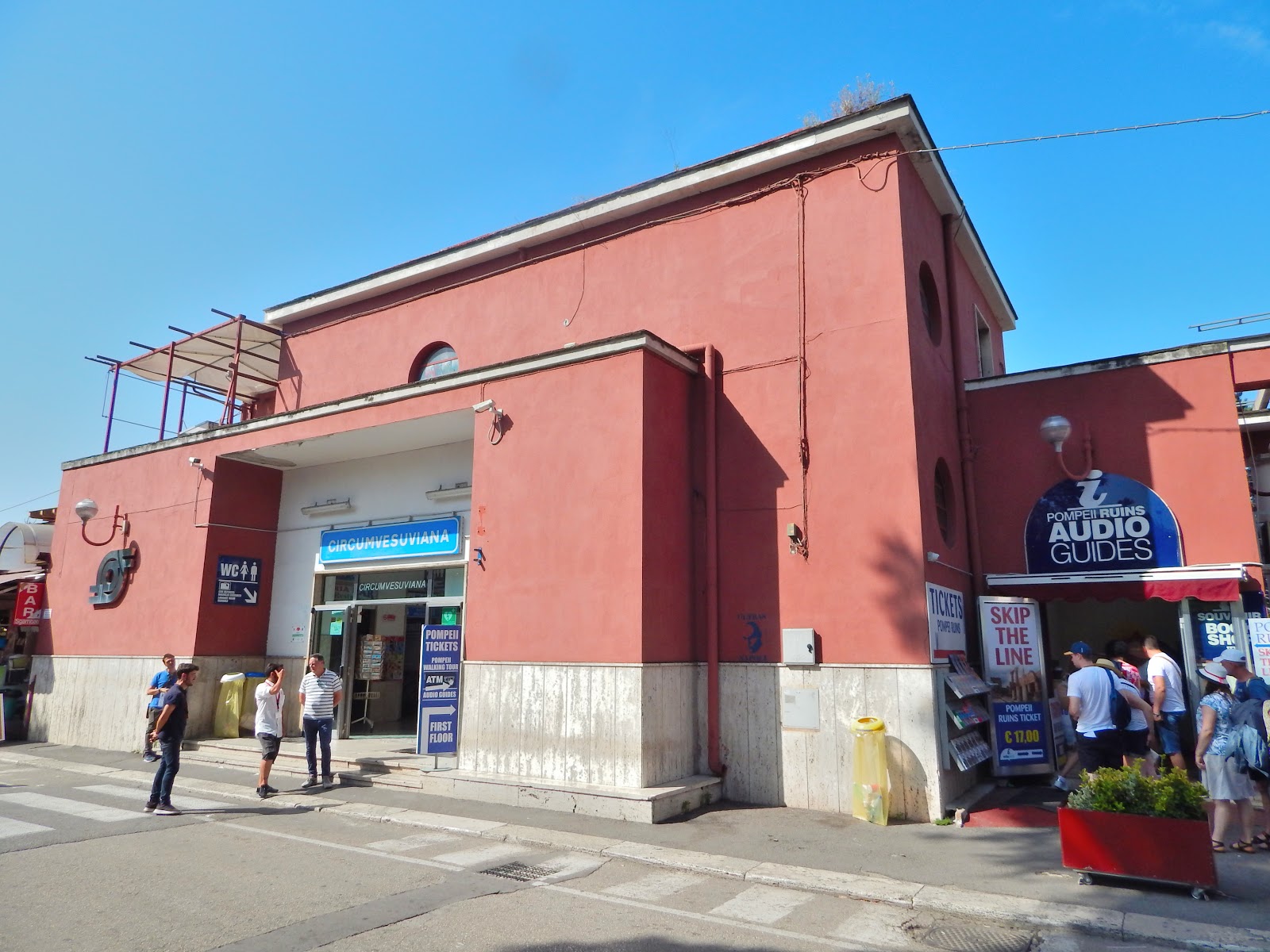 Pompei Scavi - Villa Dei MisteriThe entrance to the ruins is 50 meters from the station and there is a tourist office on the same street. |
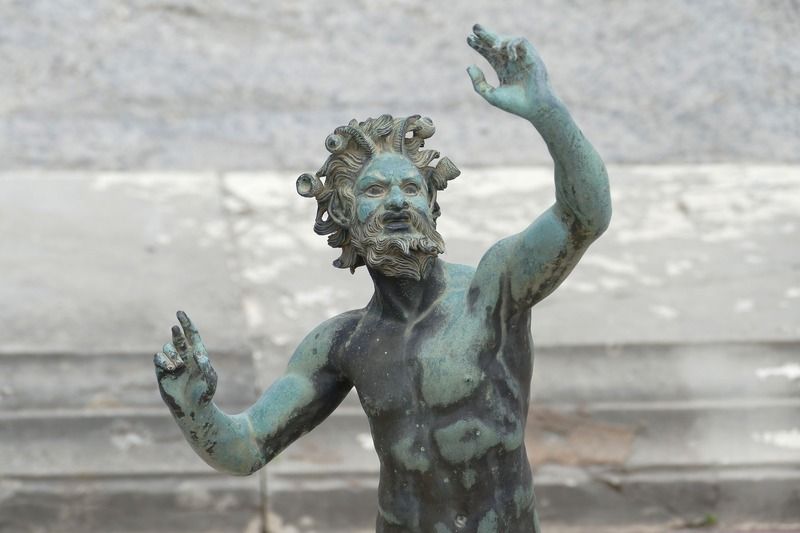 Casa del FaunoThe House of Fauno, built in the 2nd century a. C and excavated in 1830, it is one of the most famous buildings to see in Pompeya as well as being one of the largest Roman houses (3000 square meters with two large courts) and luxurious in the city, being decorated with all kinds of works of art. Among the most important pieces found was a small bronze statue of a Fauno and a mosaic representing the Battle of Issos between Alexander the Great and Darius III of Persia. The two original pieces are found in the Archaeological Museum, one of the most essential places to see in Naples if you have already visited Pompeya, having a lot of objects found in the excavations. |
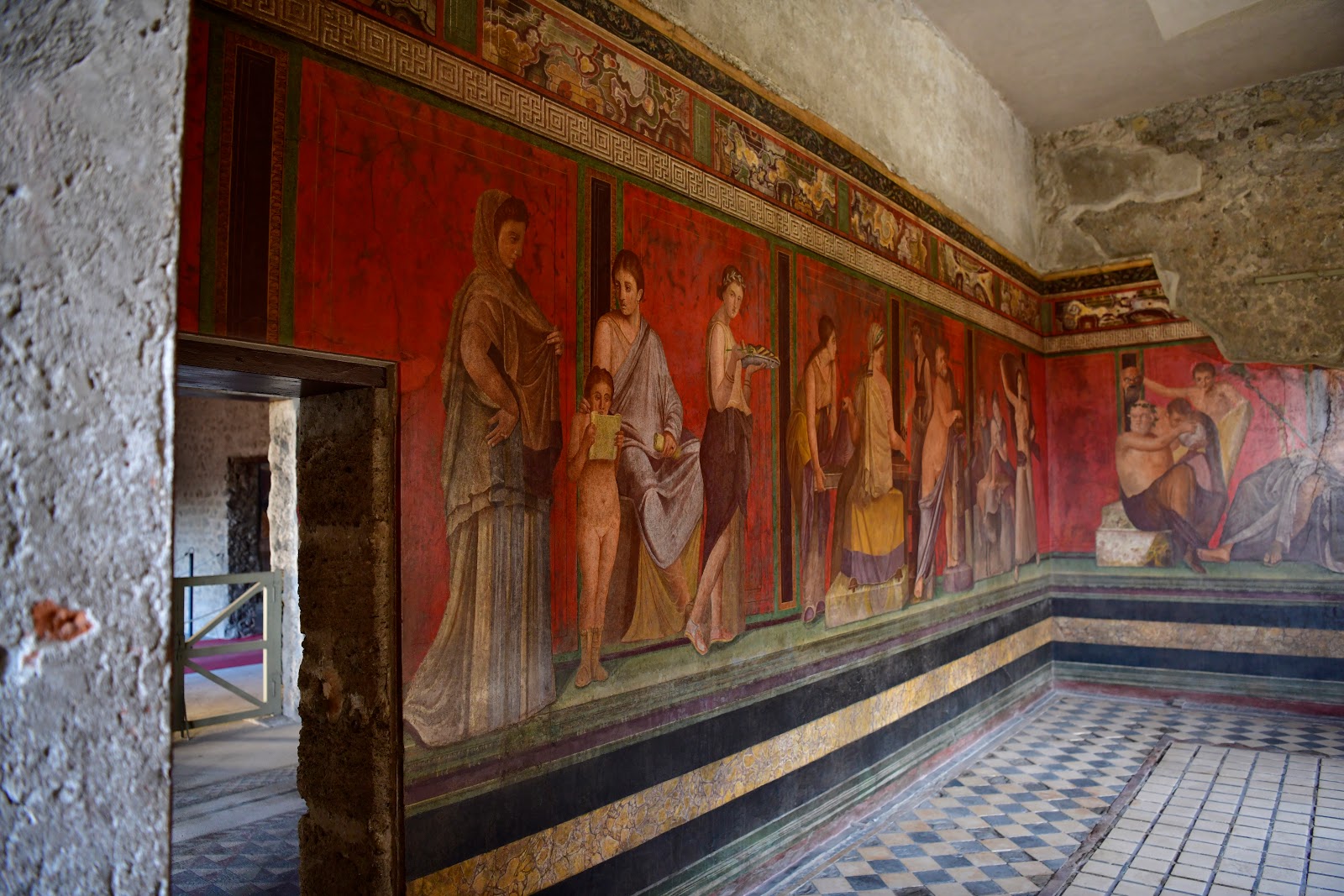 Villa of the MysteriesThe Villa de los Mysteries, located on the outskirts of the old city, is one of the buildings that suffered less damage and one of the most beautiful places to see in Pompeya, which you cannot lose. Inside this villa are preserved impressive well-preserved frescoes, especially those of a stay that represent the initiation of a woman in a cult of Dioniso. . |
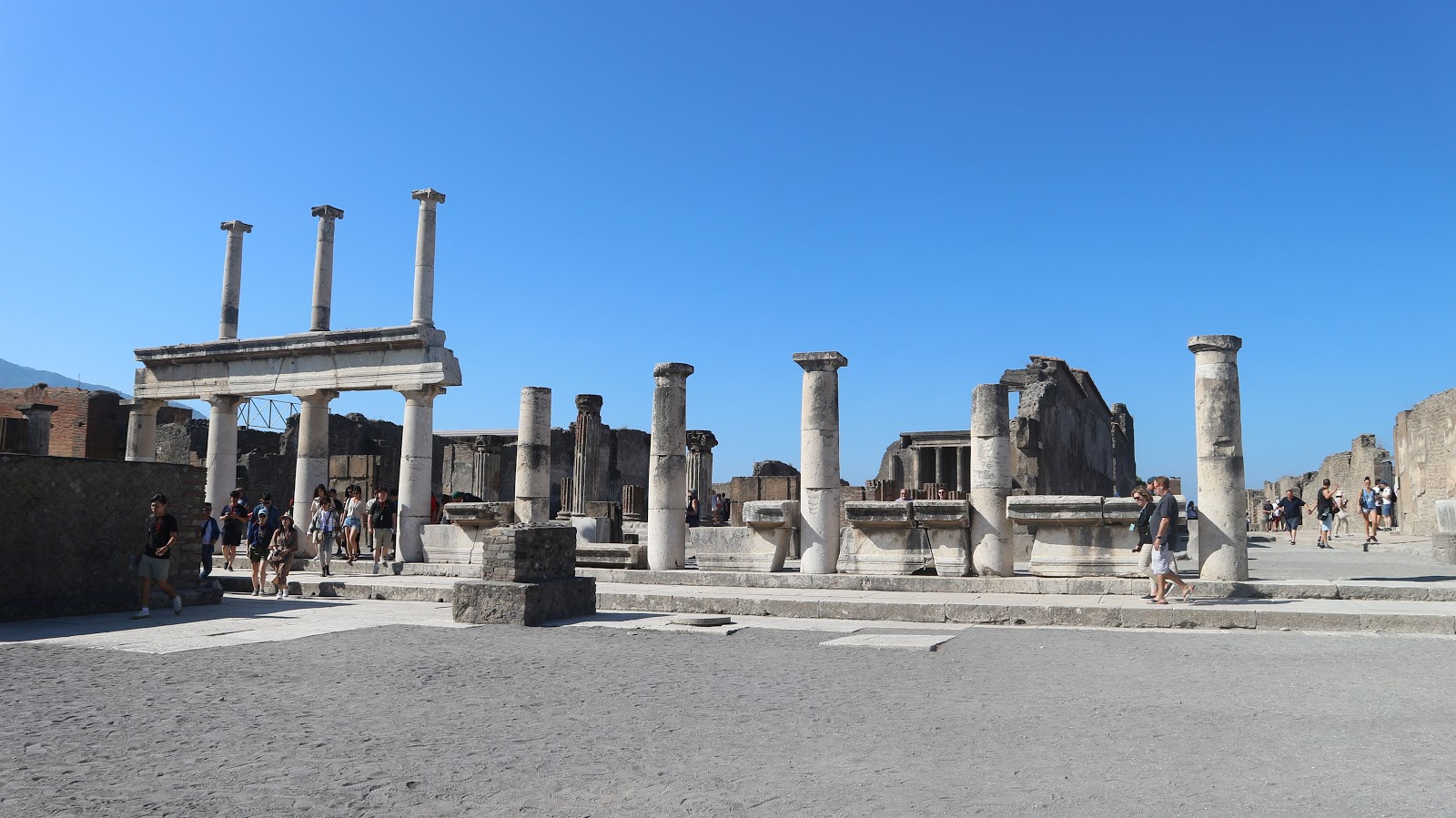 The ForumThe Forum was a square of almost 150 meters long surrounded by important buildings and where business, public life, religious activity and the administration of justice in Pompeya took place. Although it is one of the best preserved forums of antiquity many of its statues disappeared and only some of the columns surrounding it are preserved. Among the ruins of the most important buildings of the forum are those of the Temple of Jupiter and of Vespasian, the building of Eumachia, the temple of the Public Lars, the basilica, the macellum, the weighting mensa and the arches of triumph. |
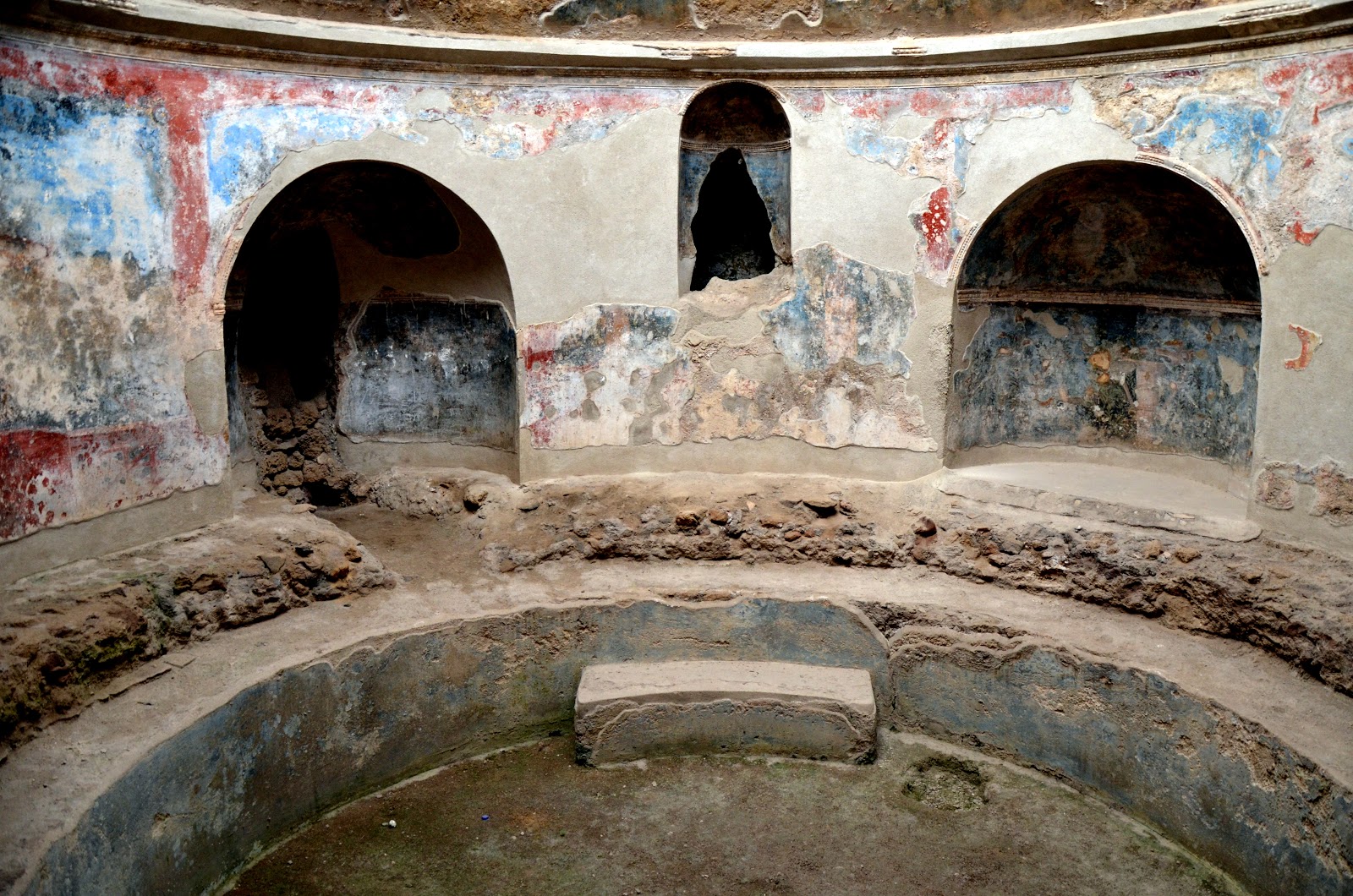 Terme StabianeThe Terme Sabiane is a complex of Roman baths built between the 4th and 3rd century BC and another of the places to visit in Pompeya. Inside these hot springs divided between the male and female areas, you will find the remains of a gym surrounded by columns, a frigadarium (cold bathrooms) with a beautiful vault, a tepidarium (warm bathrooms), a caldarium (hot bathrooms), latrines, an outdoor pool and several decorative objects. Remember that in addition to these, there are other interesting hot springs with the structure similar to those of Sabiane, located next to the forum. |
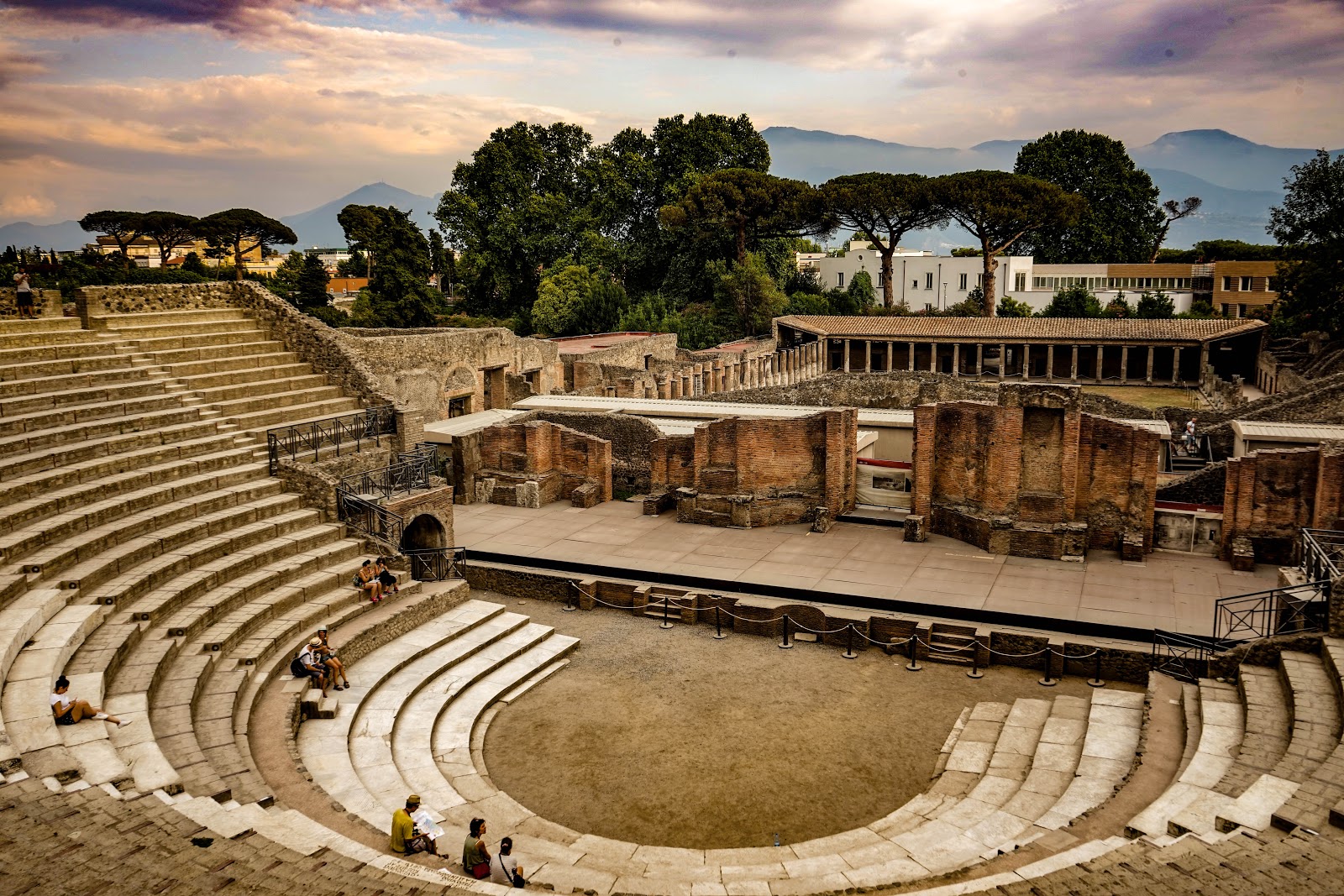 Big theaterThe large or larger Greek-style theatre, built in the 2nd century BC, had a capacity for 5000 spectators that were distributed on three levels according to the social class and was where great works of comedy and tragedy were represented. |
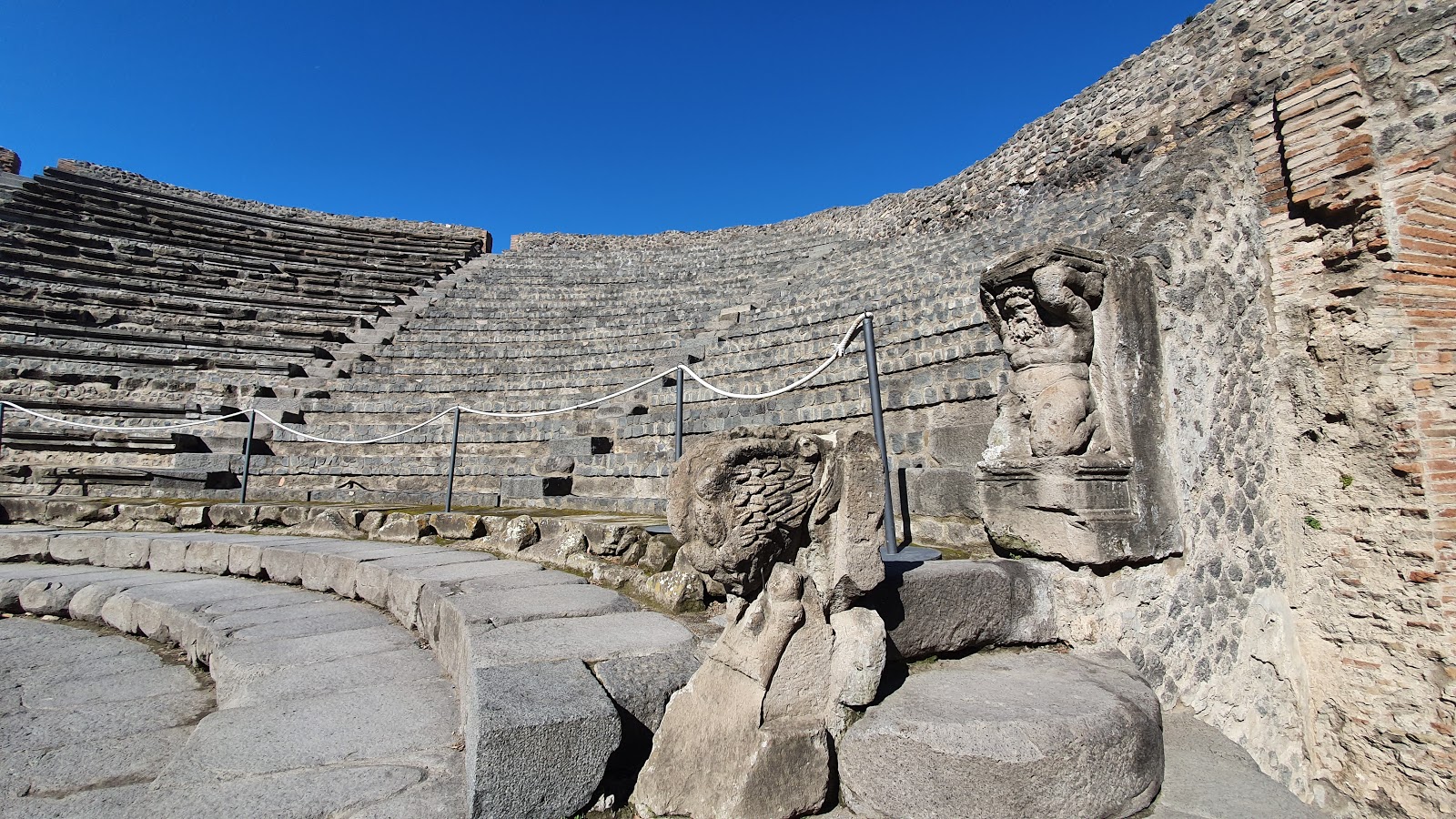 Small theatreThe small or odeon theatre had a capacity for 1000 people and is one of the best preserved places to see in Pompeya as well as having a smaller and better acoustic capacity, being the place where the musical and recent poetry shows were held. |
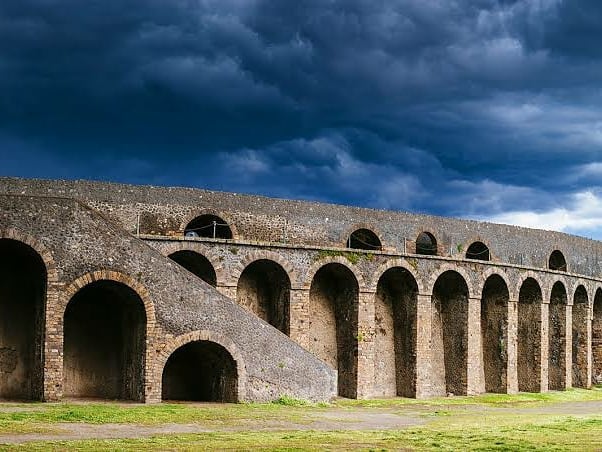 AmphitheatreThe amphitheater of the year 70 BC was the first built in stone and is the oldest to be preserved in Roman civilization, before that of the Coliseum. In this huge compound, the famous fights between gladiators and animal struggles brought from Africa were held, in front of 20000 spectators. |
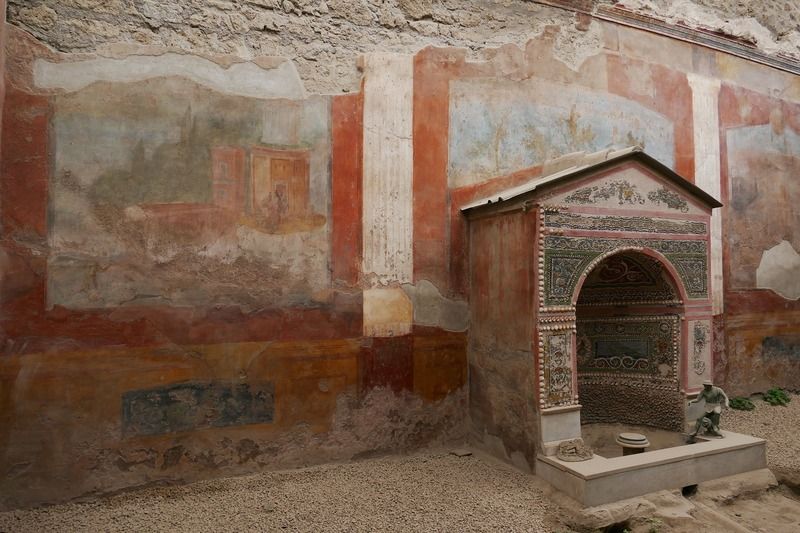 Casa della Fontana PiccolaThis house stands out for its nymphee fountain decorated with mosaics and sculptures. |
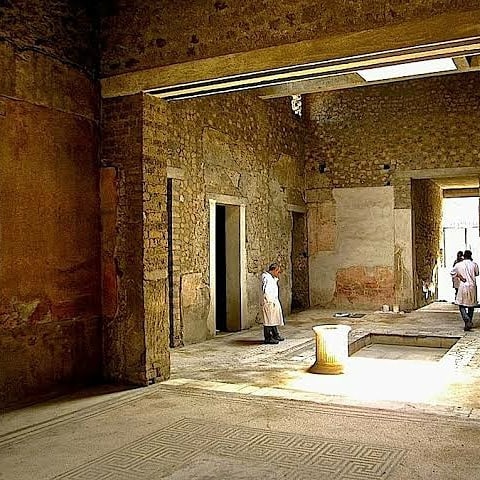 Casa del Poeta TrágicoThis Roman domus of the 2nd century BC stands out for its precious mosaic floors and its frescoes on the walls. |
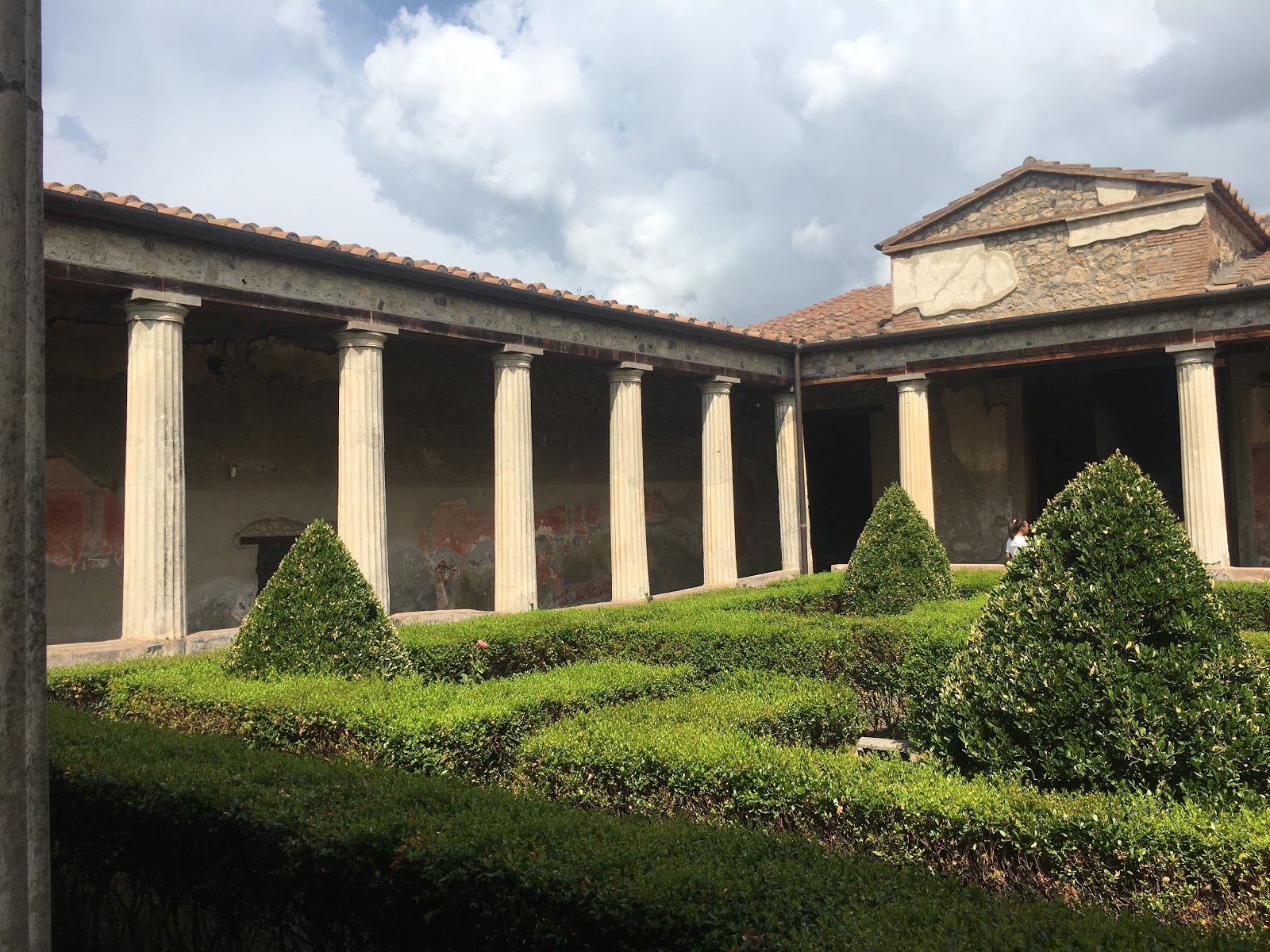 Casa de MenandroIn this luxurious Roman residence an image of the Greek poet Menandro was found and is one of the best preserved in Pompeya. |
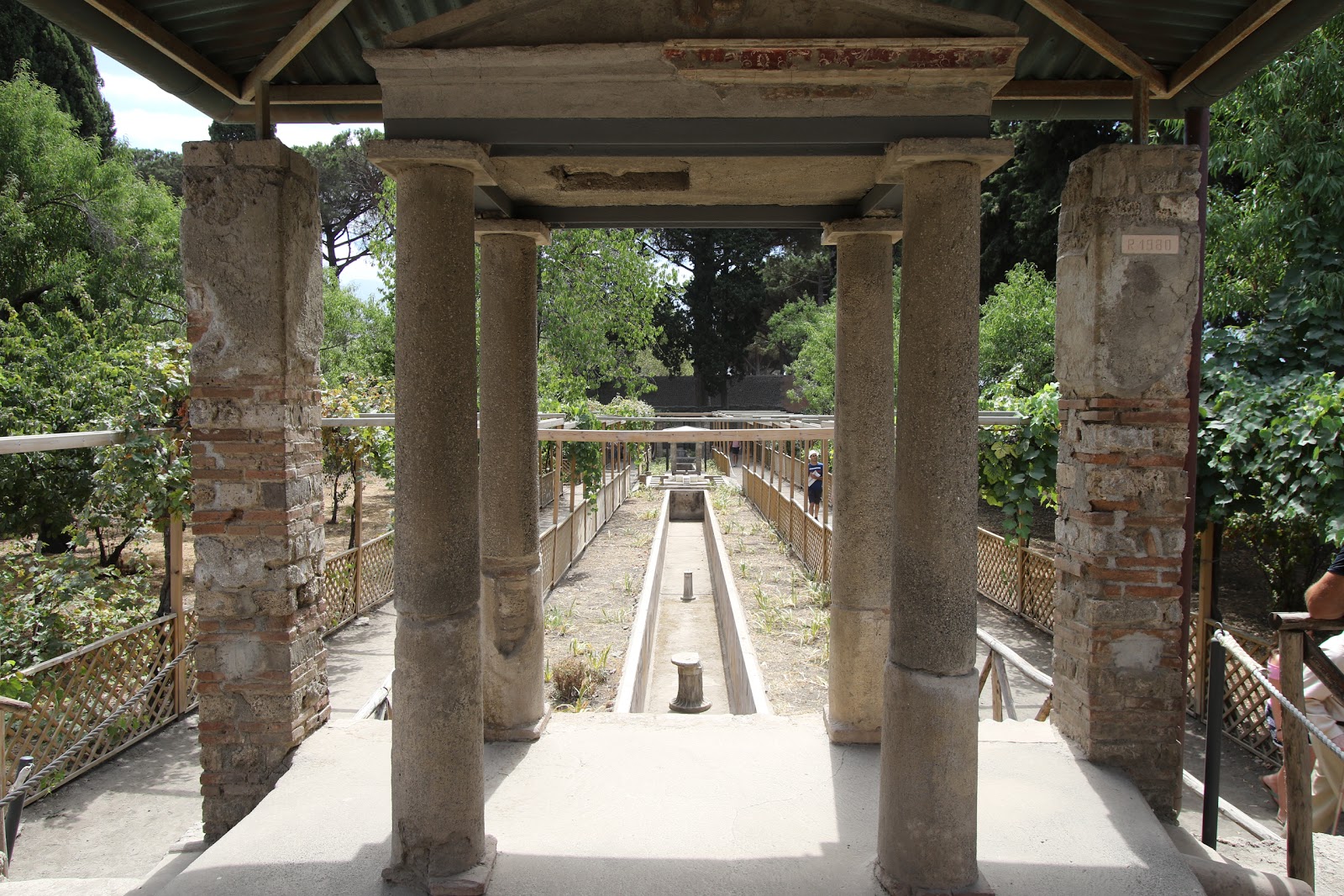 Casa de Octavius QuartioIn this Roman villa of large gardens are several fresh pompeyans. Next to this house is another building with the famous Venus mural. |
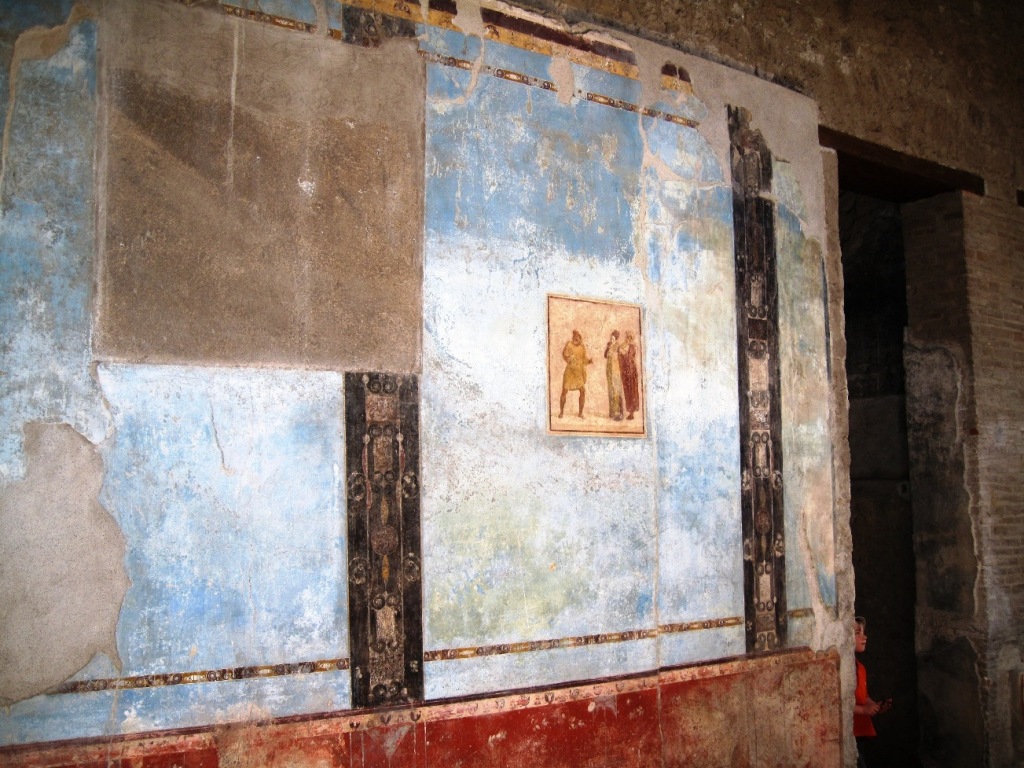 Casa di Casca Longus o dei Quadretti TeatraliThis domus has a beautiful marble table with lion sculptures and frescoes inspired by works by Euripides and Menandro. |
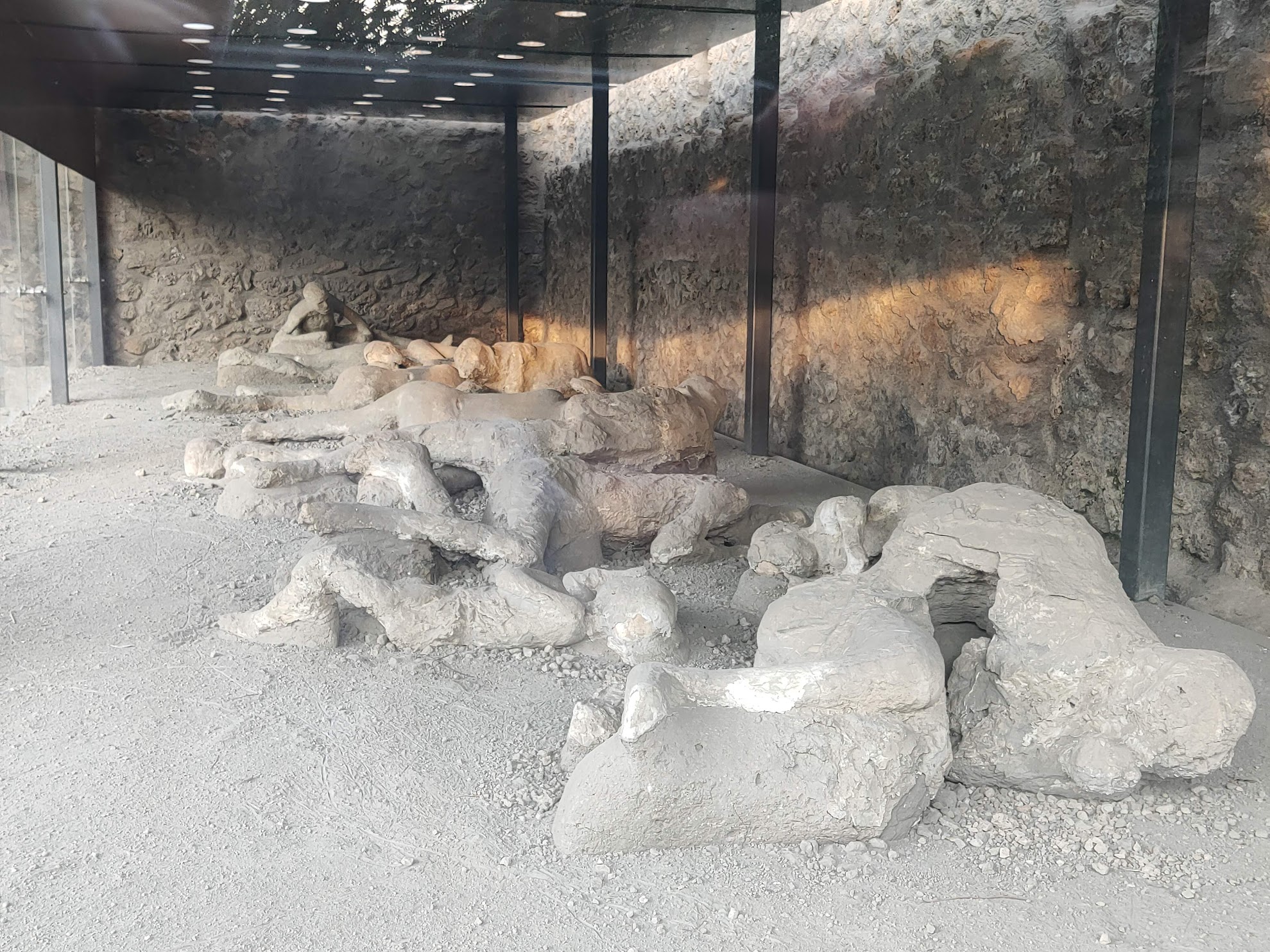 Garden of the FugitiveThe Orto dei fuggiaschi or garden of the fugitives, is one of the most emotional places to visit in Pompeya when the mold of 13 people, adults and children, tried to escape the eruption of the volcano. These molds in which you can see the faces of terror and the twisted positions of the bodies when they died were achieved by filling the cavities that left the bodies with plaster and then removing the hardened ash layer. |
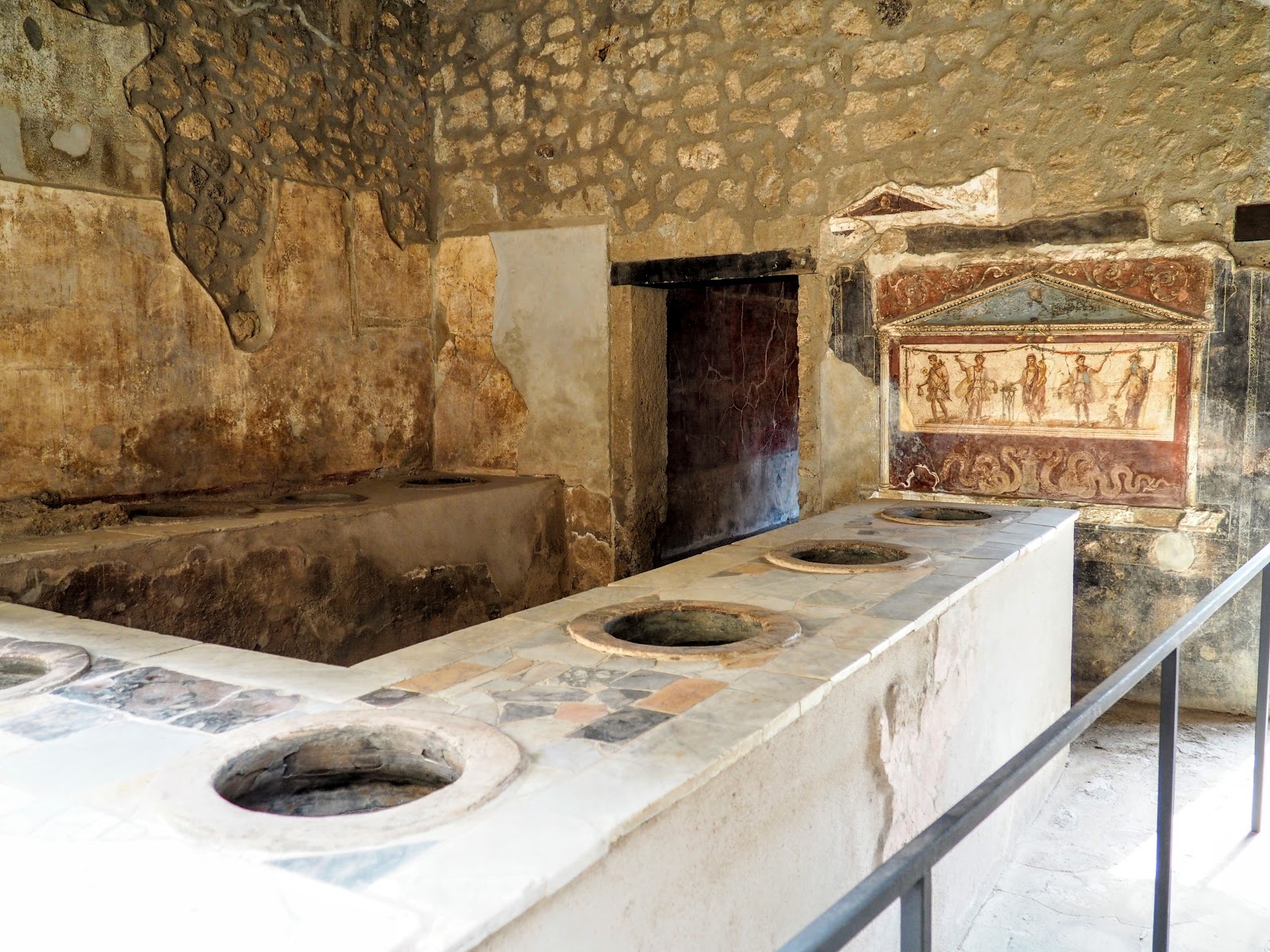 ThermopolyIn 2019, archaeologists digging in the Region V of Pompeya made a magnificent discovery: the remains of a thermopoly or tavern that preserved magnificent pictorial decorations, including, on the counter, the image of a neereid (a marine nymphs) on horseback in a marine environment. The place is located between the road of the Silver Wedding and the road of the Balconies. In front of him, in a small square, a tank, a fountain and a tower for water distribution located not far from another establishment of the same type containing a fresh realist of gladiators in full combat was also discovered. |
In the year 79 AD, a violent eruption of Vesuvius buried the old city of Pompeii by immersing it in a time capsule. Today, many years later, their remains are still discovered to learn new details about what the Roman cities were like at the time. As its unparalleled state of conservation is buried, it is able to excite both historians and tourists, for it is rightly one of the most visited places in Italy.
Latitude:40.748651·Longitude:14.481328