The Camin Encantau
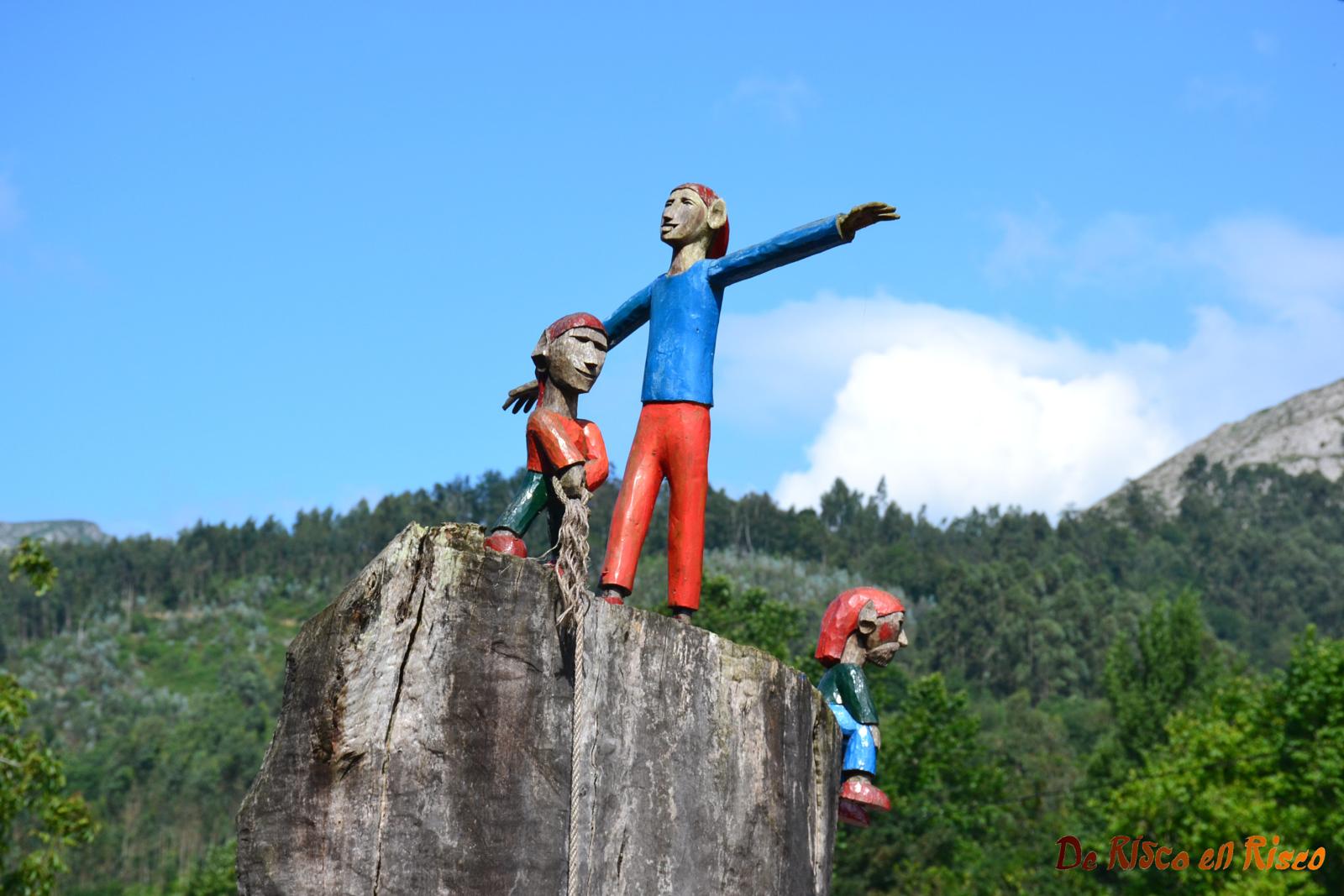 Trangus meetingOur way starts from a meeting of Trasgos, in a place called La Venta los Prores, where you will find the apacarcación and a tiena-bar. These little leprechauns, of almost human appearance, will be recognized because they are dressed in colored blouse and hat, slightly limp and have the palm of the left hand. They are naughty and love to spend heavy jokes: when it is at night, they enter the house through the fireplace or through a poorly closed window and change the furniture, steal the food from the pantry, play the bowling in the attic or release the poultry cattle. It is not strange to find them in forests and roads, so, walking friend, watch your belongings, not that in a neglect you no longer have them. It's hard to get rid of a Trago when he's in your house; not even moving to a new one will you get it, for it's easy for him to go with you, behind. To achieve this, you can propose to him with a certain concealment to carry out any of these tests: - Bring water in a basket. - Extend millet (small grain) on the ground and ask him to pick it up. - To pick up and bring water in your hand. Wounded in his pride by not being able to meet the challenge, he will not be able to bear the shame and will take off with fresh wind. Watching your back, lest they follow you closely, start the march along the path that borders the houses and passes by the river. |
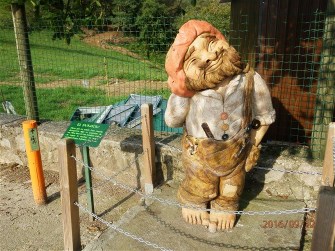 The SumicuAs you walk, put the lock in your backpack and your pockets, which beyond you the Sumicu awaits. If you're missing anything later, I've already warned you. He's a little leprechaun who's fond of stealing the things that fascinate him and, unlike the Trago, he'll feel preference for the objects you need most. So, if you don't find that object you need and you thought you have located, you know who to blame. If you want to free yourself from the Sumiciu, say a prayer to San Antonio, but do it right or you won't get the stolen. It continues to advance between meadows and trees. It's a place for unexpected encounters. Who knows what or who can appear behind the moth trunk of a tree, from between the bushes and ferns, or the masked sebes that sometimes line the path. |
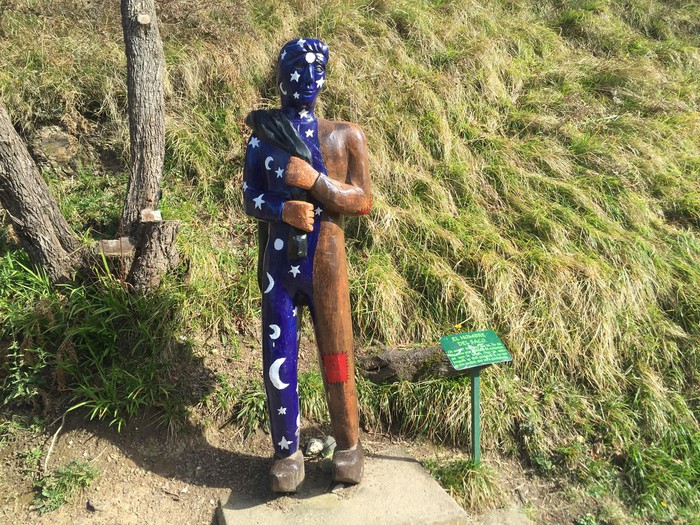 The Man of the SacoYou go down the road a little bit and, if you're a kid, be good, that at any time a somewhat sinister character, who carries a sack behind his back, you know who I mean? It is the Man of the Saco, who goes out at night looking for disobedient and naughty children who in a neglect catches and, in a view and not seen, gets into his sack. |
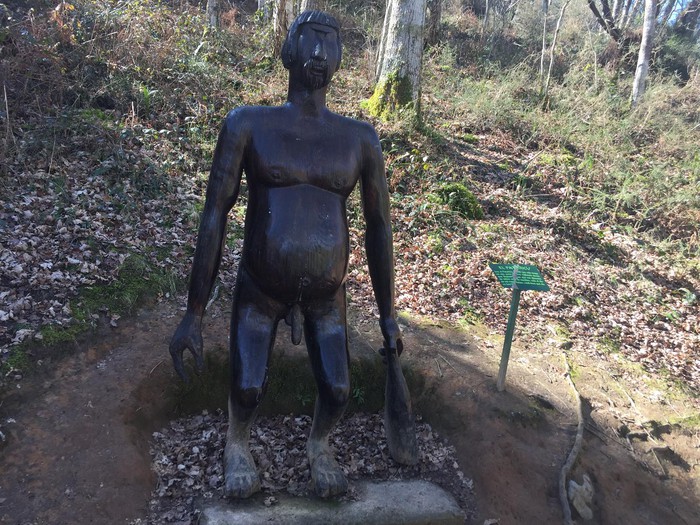 The PataricuThe path goes into a forest again. Hold your eyes, see if you can find the character who's watching you from afar. With his only eye he sees everything, but it's no use to hide, be sure he smelled you, too. His arms are like a wood, he walks in a leather and with his left hand he holds a joint, you know who he is? The legend says that these beings live in a country that is located in the sea, opposite the coast that extends between the rivers Navia and Eo. They are anthropologic and patiently expect some ship to shipwreck and the survivors to get to their coast, imagine for what. |
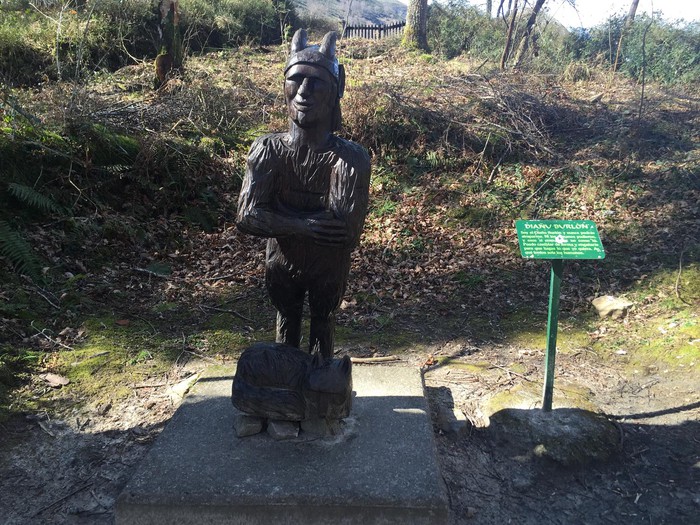 The Diañu MockeryIf you've managed to escape, keep walking and don't relax too much. Very soon you will come to the territory of a devil between man and kid, who despite his look, is not at all bad. It is the Diañu Burllón, whose main power is to change from appearance to will, now being a kid, then a white horse and later, perhaps a child. For you to be prevented, I'm going to explain to you now some of the tricks he's cheating on and mocking people: -By adopting the appearance of a horse, it passes through the roads of the forest and allows the walkers to get on their back. Against his will, he leads them to a distant place, where he throws them in laughter to the ground or to the river. - Disorients at night those who return from a party or find themselves looking for the lost cattle. - It becomes a breast child, who seems abandoned, to be collected, cleaned and breastfed. - She transmuts into a domestic animal to watch women undress. The Diañu Mockery is completely harmless, he has no bad intention, although incording is a bug. If you name God or show him a Cross, he will disappear immediately without saying or pious. |
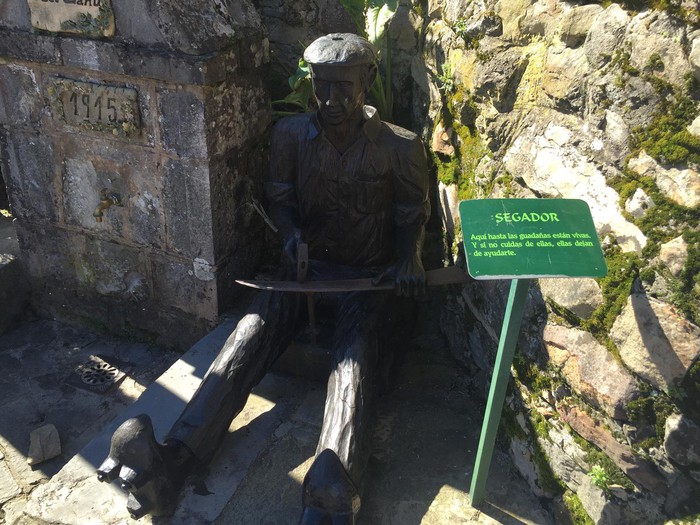 The ReaperHere is a typical character from the rural world of Asturias: the reaper. It is found "ripping" the leaf of the scaffolding, action that consists of hammering the edge of the leaf to thwart it and be able to sharpen it later better. It calves the traditional Asturian sluts, which are based on the ground by three tacos, and which in Asturias they call "madreñes." In the sunny pastures, where the peasant seizes the grass with which he will feed the cattle, you may find, if you are in the right season, some kind of wild orchid unexpectedly. |
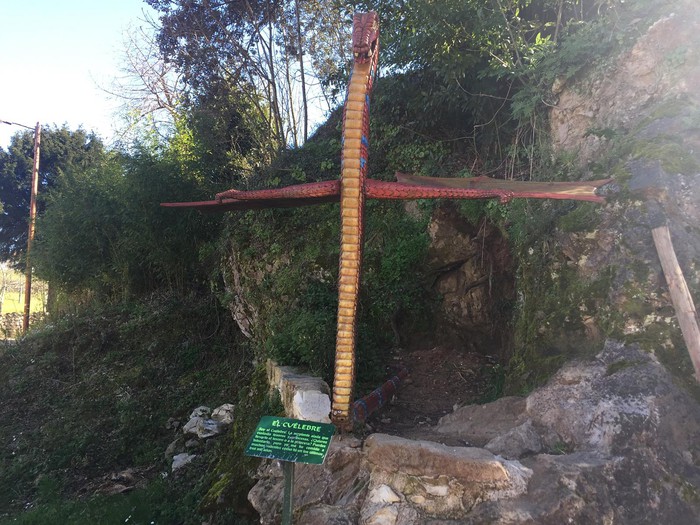 The HashWe left Palacio and arrived in Ardisana. Pay attention, that in a path requirement you can run into the Cuélebre, almost in a sopeton. It is a fearsome male culebra, with wings that look like bat and strong scales, that eat the cattle or yourself if you put yourself to hand. They say there are seven heads, even though I don't know of someone who has seen it, and sometimes they demand human sacrifices, I from you, coming out of there pounding! Although if you're brave, and you haven't wanted to escape, your weak point is your throat, will it be true? It dwells in caves and fountains, and preserves enchanted treasures and princesses; if you want to take them off or rescue them you will have to deceive him: as if of bread were treated, give him to eat a round stone heated to the living red, and so you will get to kill him. |
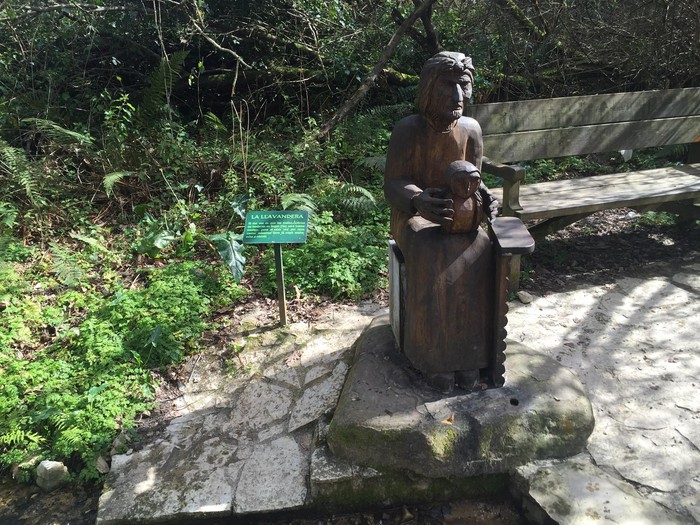 The key lineShe is an old woman with white hair and a skinny, wrinkled face, who lives in the hole of an oak and her appearance preaches the misfortunes. It manifests when the river overflows, and maybe you hear his shovel hit the stones when he washes the clothes in the dark of the night. It's very hard to find it, but if you get it and ask you to help him twist his clothes, you better not do it; if you do it in the opposite way as she does, you will die drowned. |
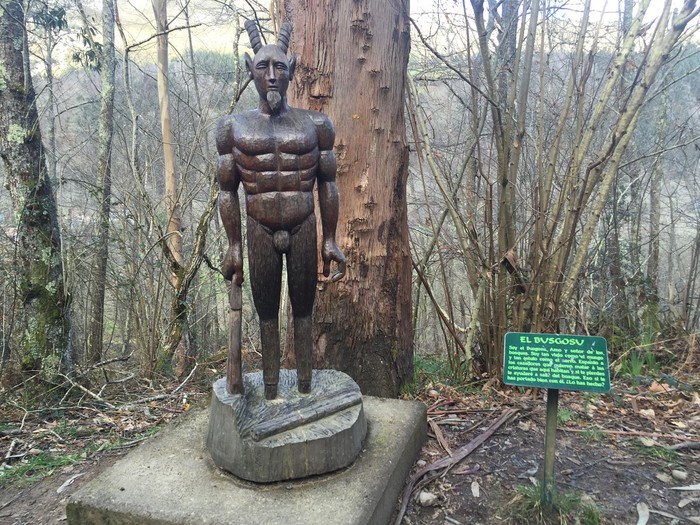 The busgosuGoing down to Riocaliente, he's waiting for you. It is a being between man and goat, protector of the forest and of the animals that live in it. It lives in caves and deep places. Don't be a rogue and respect nature, or you'll see your faces with it. He dislikes lumberies and abducts neglected women. But it also helps the one who's lost; if you leave him alone, he's not that bad a guy. So, if you see him, don't try to chase him, or you'll end up in a ravine, you're prevented! |
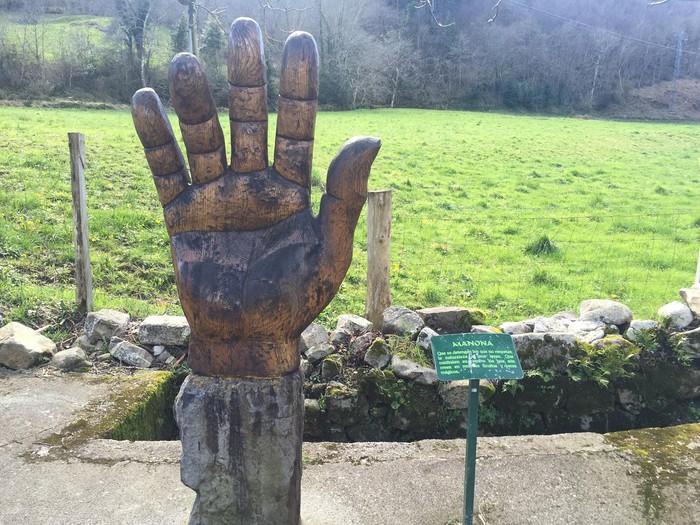 ManonaAt the end of the slope, already in Riocaliente, you will meet La Manona, planted as a warning against unbelievers who do not admit the existence of the magical world, and those who despise and harm nature. I'm sure you're not one of those guys, because a little earlier with El Busgosu you would have had them. |
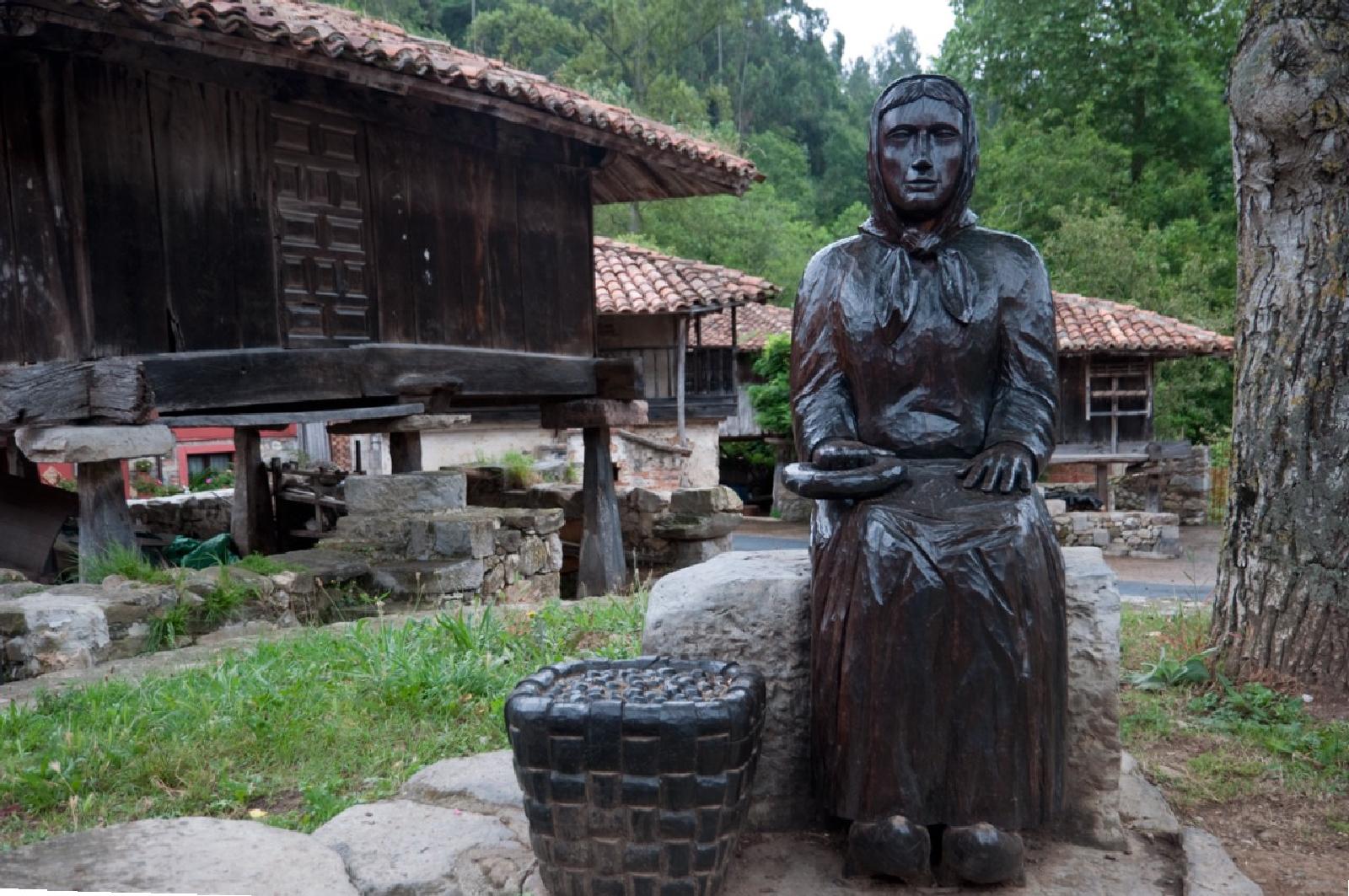 The CastaneraAnother popular figure in the rural world is that represented by La Castañera. Since its introduction by the Romans, chestnut has been a fundamental food in the feeding of the Asturian peasant, especially before the arrival of the corn and potato from America and in times of scarcity. It was consumed in different ways: roasted, cooked, in flour, etc. It has also been used for livestock feeding. In the autumn, coinciding with the collection, the "magüestu" or "amagüestu" was organized: a meeting of people to roast ("magostar") and eat chestnuts, accompanied by sweet cider - recently pressed apple juice, before fermentation. This tradition continues to be celebrated today. |
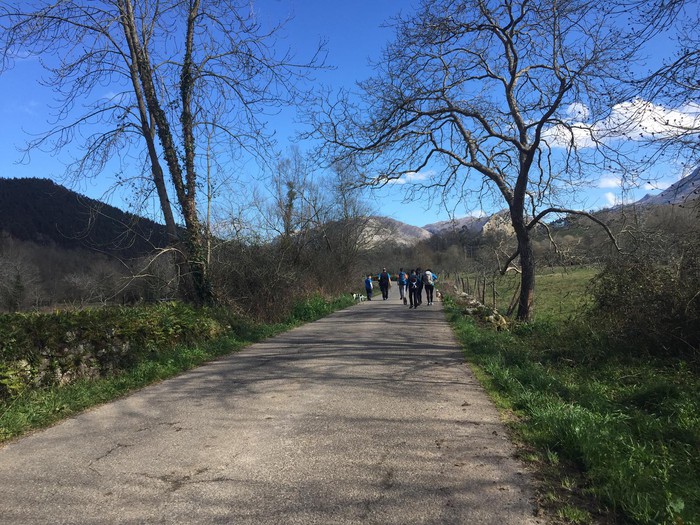 Road traffic 2 km |
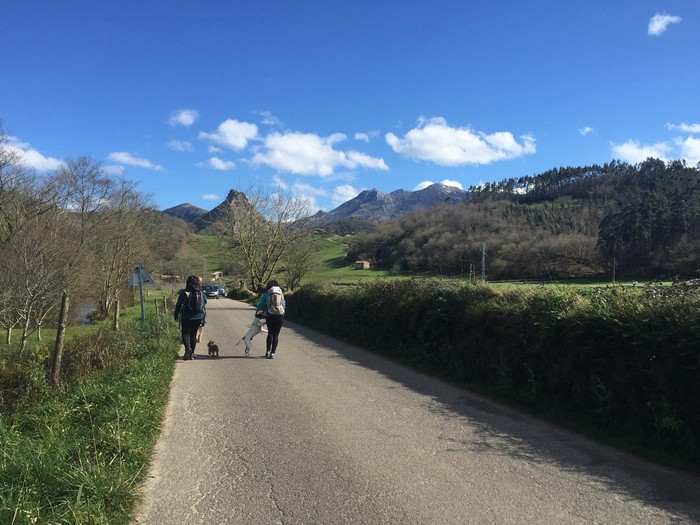 Last section road |
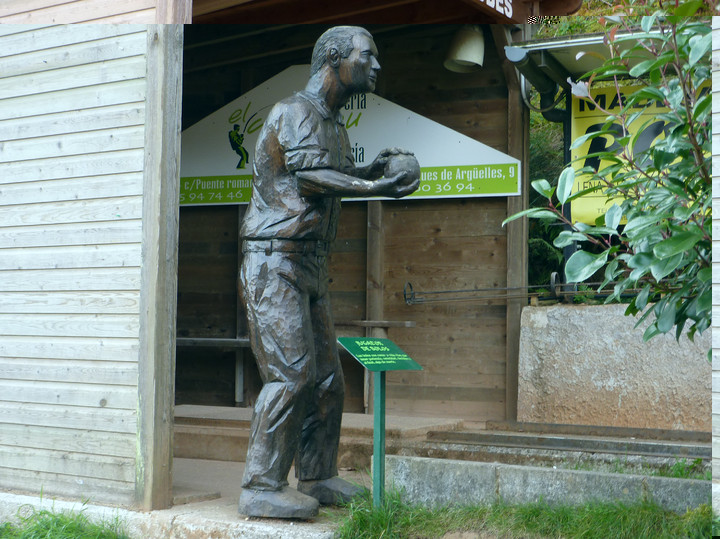 The BowlerBack to The Protest Sale, you'll see the Bowler. The bowling game, in its different forms, was very popular in Asturias until long after the beginning of the 20th century. The bowling alley consisted of a flat place, where the spaces occupied by the bowling and the player were marked, and was often located next to the church or the village bar. Balls and bowls used to be made by the players themselves. A renacer of this game is currently living and has championships and tournaments of the different modalities. The bowls have become covered and better defined spaces. |
Asturias has to be a Natural Paradise, but it is also a Magic Country where the real and the fantastic are intermingled in the same way. Start the way and you will find fabulous beings that will meet you and beautiful landscapes of lush nature, sometimes bitter, others transformed by man's hand. You will walk through roads that have been going on since time immemorial, which will take you to villages and villages of extraordinary beauty, where life follows its own path. The Enchanted Way runs through the Ardisana Valley, located in the Asturian Council of Llanes, just a step from the coast and its magnificent beaches, and two from the Picos de Europa National Park, prodigious mountain massif in northern Spain. .
Links:wikiloc.com·senderismoenasturias.es·tripadvisor.es
Latitude:43.396820·Longitude:-4.913387