Route of the Cetarean
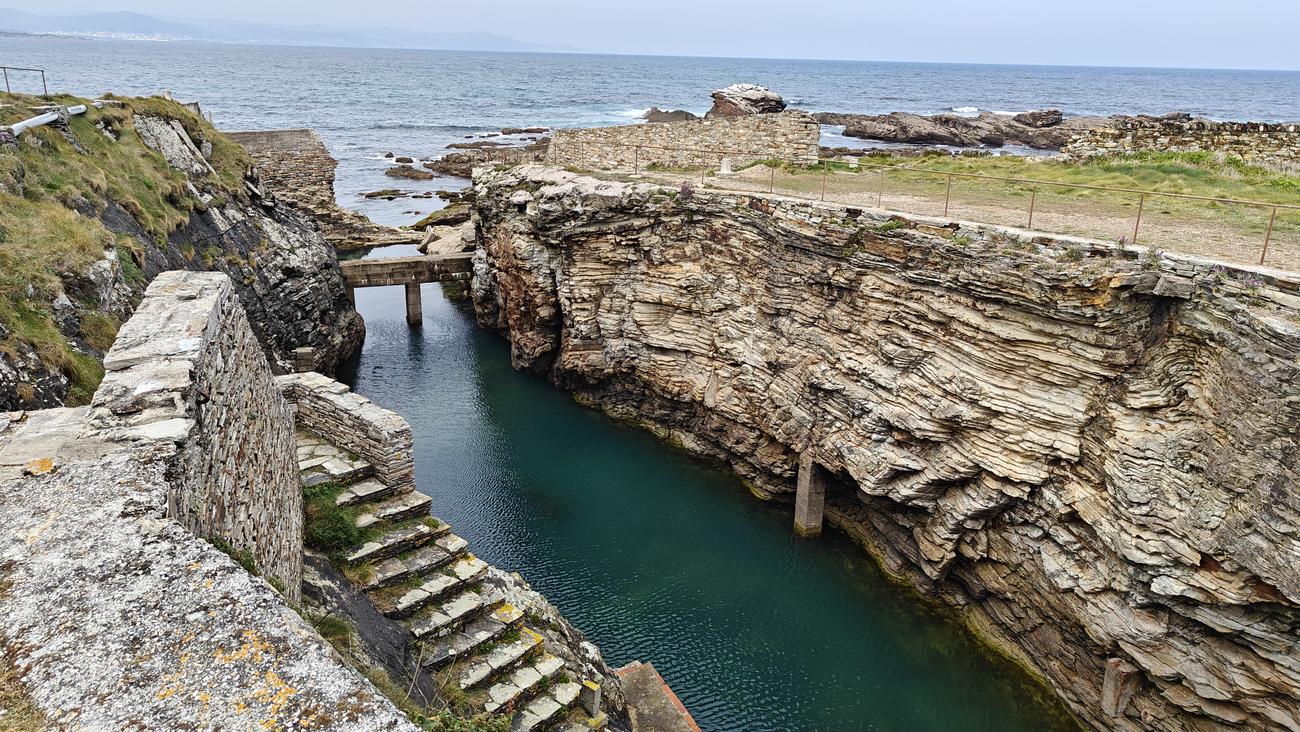 Olo Longo Cetarean in Punta CorveiraThe market asked more and more, the Rinlo shellfish agreed there where it was sold and a few years later, around 1954, this third cetarea was put into operation. It is even larger than the previous ones, with a more rugged geography and is further away from the people. It consists of two different facilities: one natural, of the same style as the previous ones; and the other that worked with pumping, saving a height of almost twenty meters. In this area, outside the sea, an area for the breeding of more species was set up ten years later. A ship was built and, within it, sixteen pious that made the time of breeding, which was accessed by the corridors that surrounded them completely, to have the seafood segregated by species. Today the place is curious to see, at least for a quick photo. . |
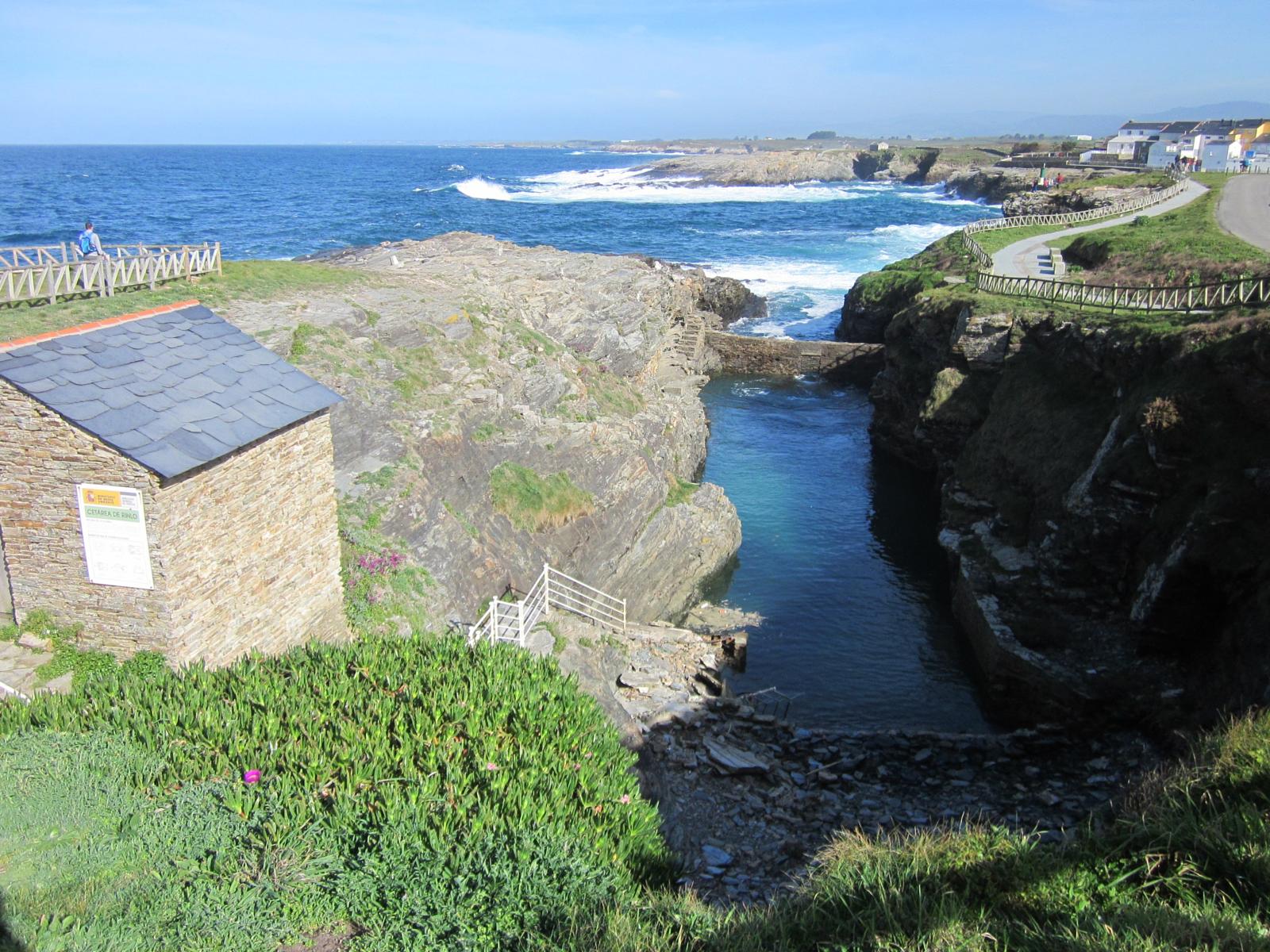 The port of RinloThe first natural ketarea that was built in the area of Rinlo was made in 1904. To build it they took advantage of a natural entrance to which the sea had been shaping it over the years. We have been told that the locals know it under the name of Estornín, although according to the official route it is called Cetarea of the Port of Rinlo. |
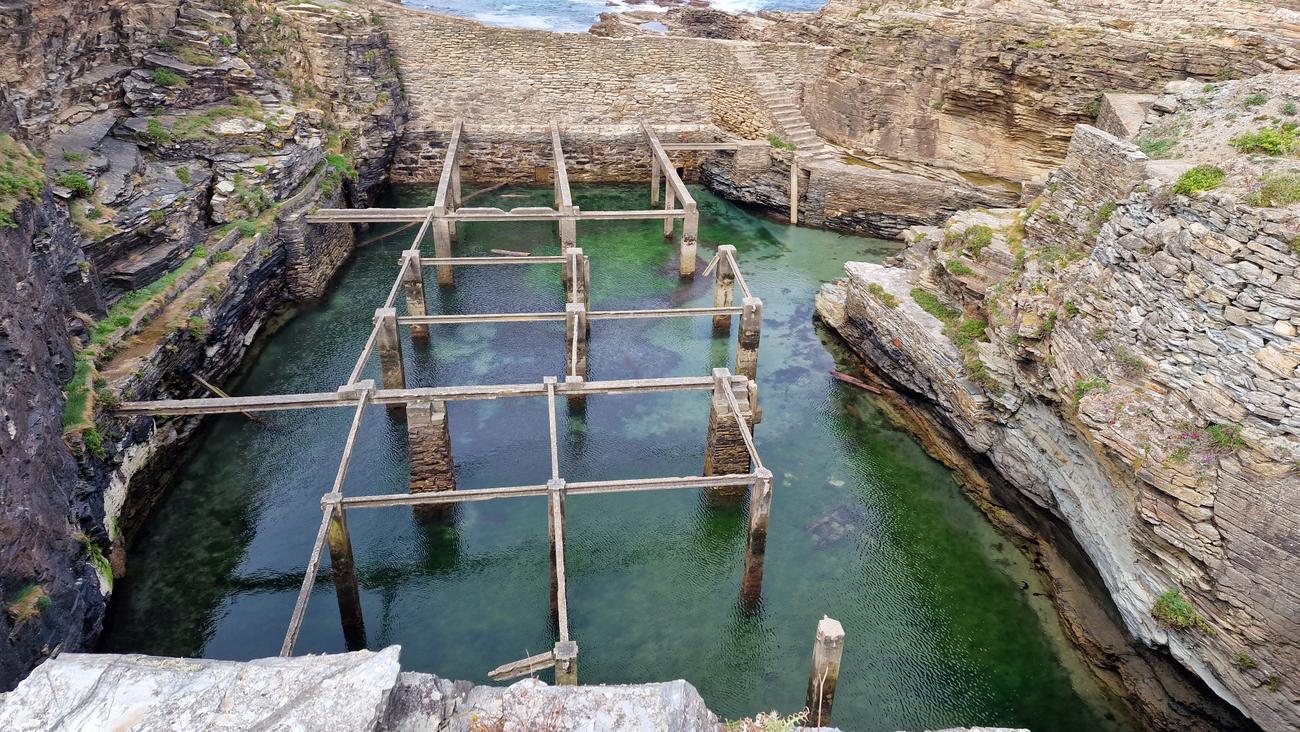 Penancin Cetarea in Corvos PenaltyFollowing the Routes of the Cetareas of Rinlo we reached the second cetarea that was built in the area. It is about 500 meters from the first, in an area that the locals know as Penancín, in Pena de Corvos. This was larger than the previous one, capable of housing up to 20,000 kilos of lobster. Here the sea flooded the enclosure in two places, so they had to close the two spaces with two doors and set up up to 25 columns at the bottom to cover the entire surface. |
We arrived in Punta Corveira, where the third cetarea of Rinlo was built in 1954. This cetarea was the largest of all, is about a mile from the village and the locals know it as the Cetarea of Ollo Longo. This cetarea evolved even more than the previous ones and there were already two types of facilities in it: one natural, like the one we have seen in the other two cetareas, and the other that worked with pumping saving a height of almost 20 meters. But this system was not quite good, it turns out that when the light and the bombs were gone, there was so little water that the specimens died. In addition, from what we could read in the information posters, the watchman had to come at night several times, even with rain and thunder, to make sure that everything was okay, and that they didn't steal the shellfish
Γεωγραφικό πλάτος:43.556986·Γεωγραφικό μήκος:-7.105577