FROM MOLINO TO MOLINO
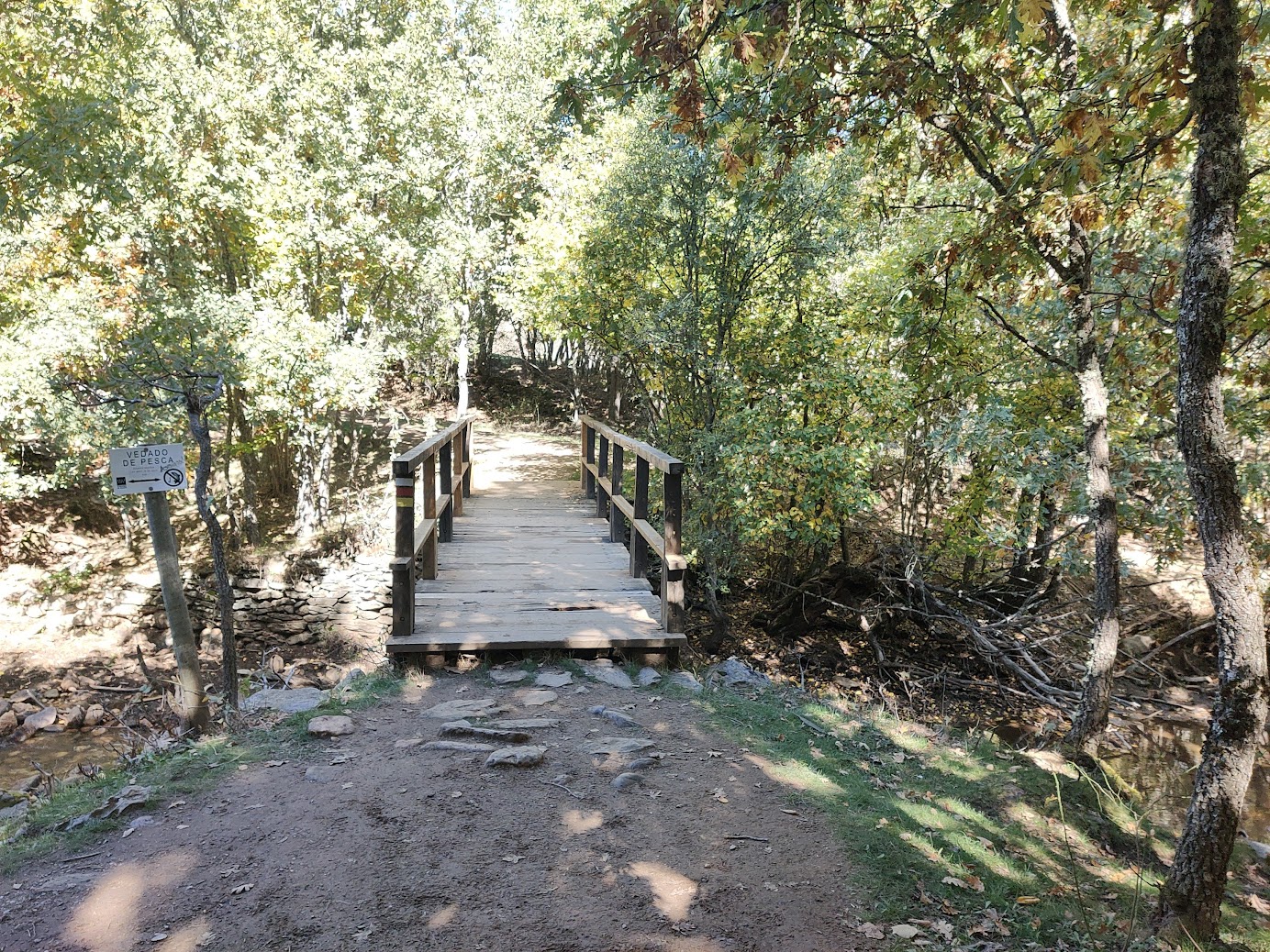 bridge over the JaramaIf we cross the river, the traditional road would lead us to El Cardoso, but our route turns right before the bridge, to follow the course of the Jarama. |
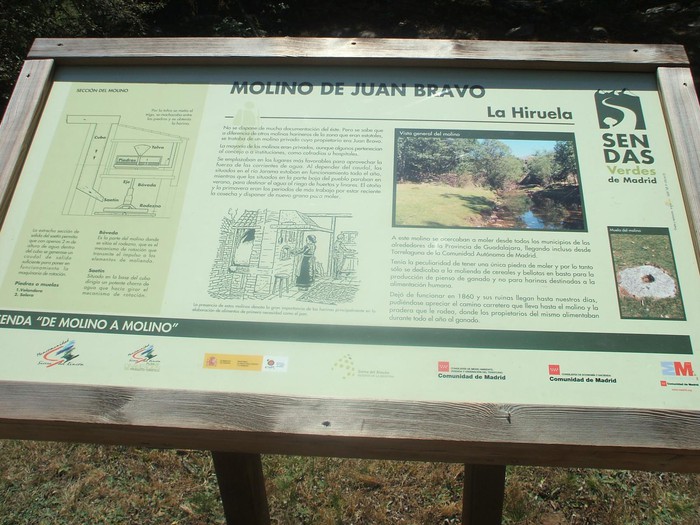 ruins Molino Juan BravoOnly the walls and an old milling stone remain of it. |
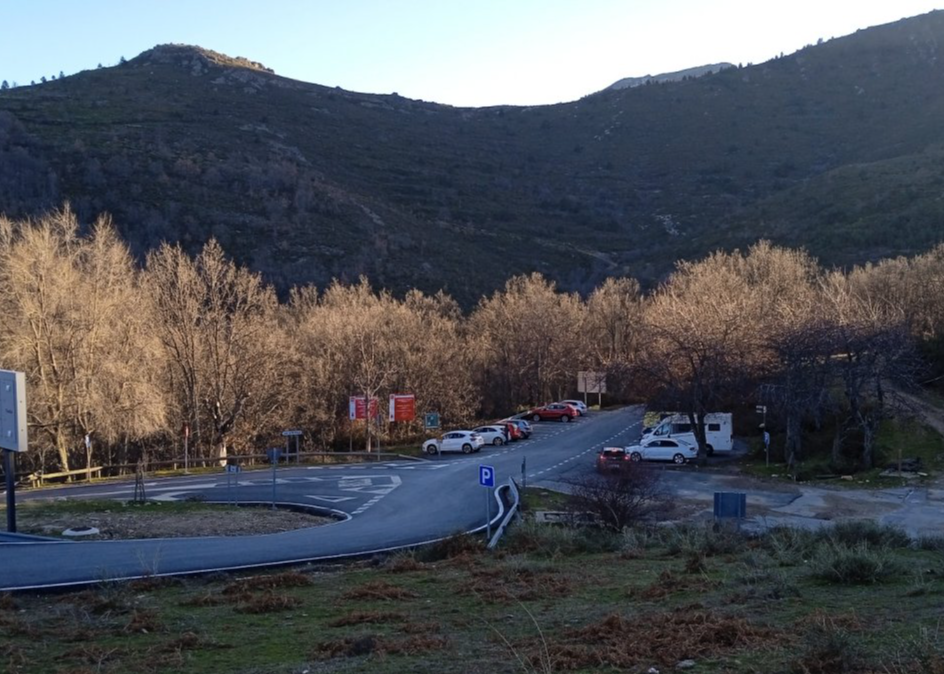 Parking |
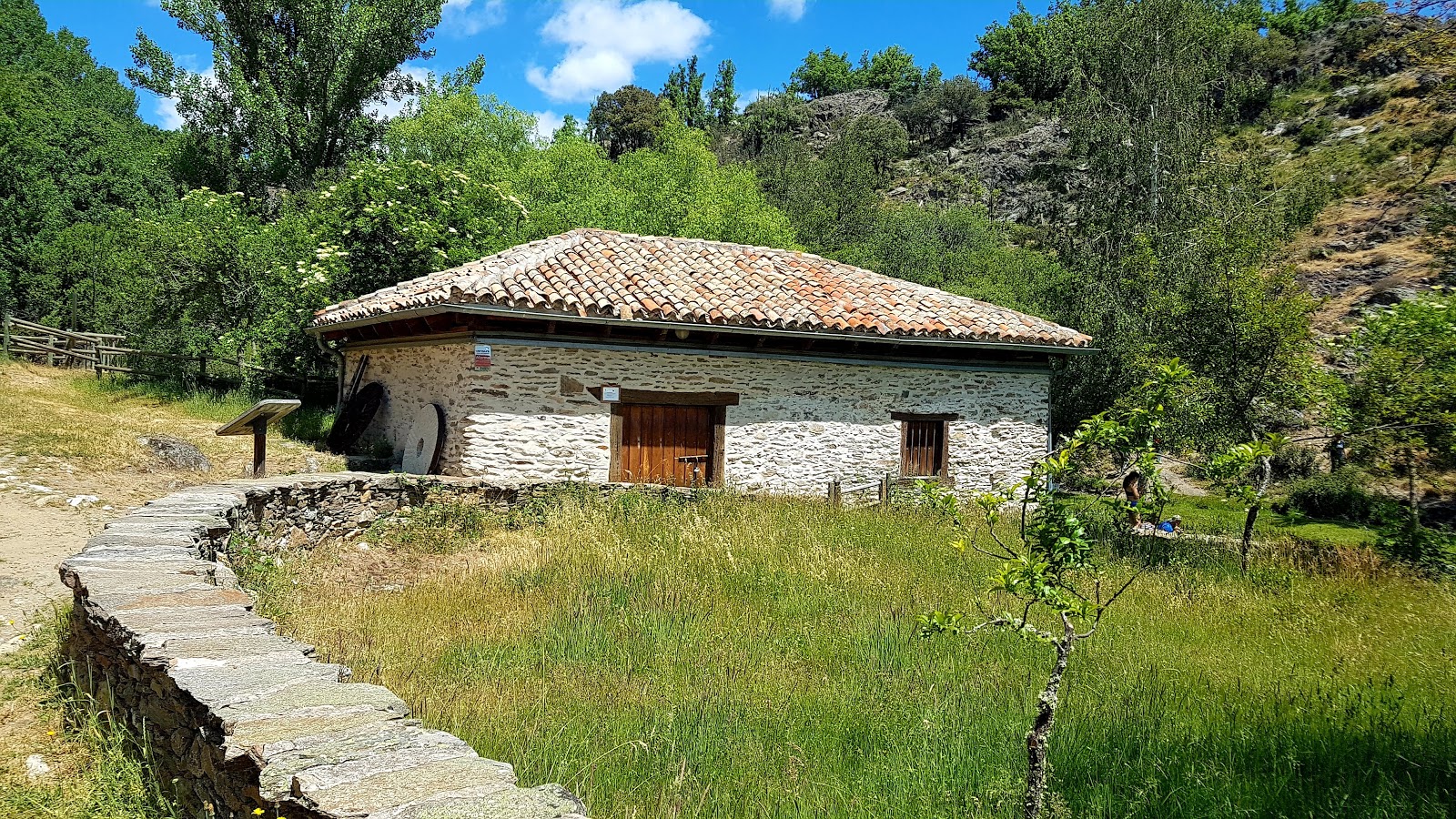 Recreative areaHarinero mill rises next to the Jarama and, in the past, used the waters of the river to mold rye, barley, corn or acellot. It was communal and a mill was rented to take care of it. It was in operation until about the 1960s and, at present, it has been recovered and the various parts that made it possible to operate are perfectly distinguished. Its environment is a small recreational area populated with chopos, wild cherry and saucos, in which there are also some tables with banks for rest and picnic and an environmental classroom. |
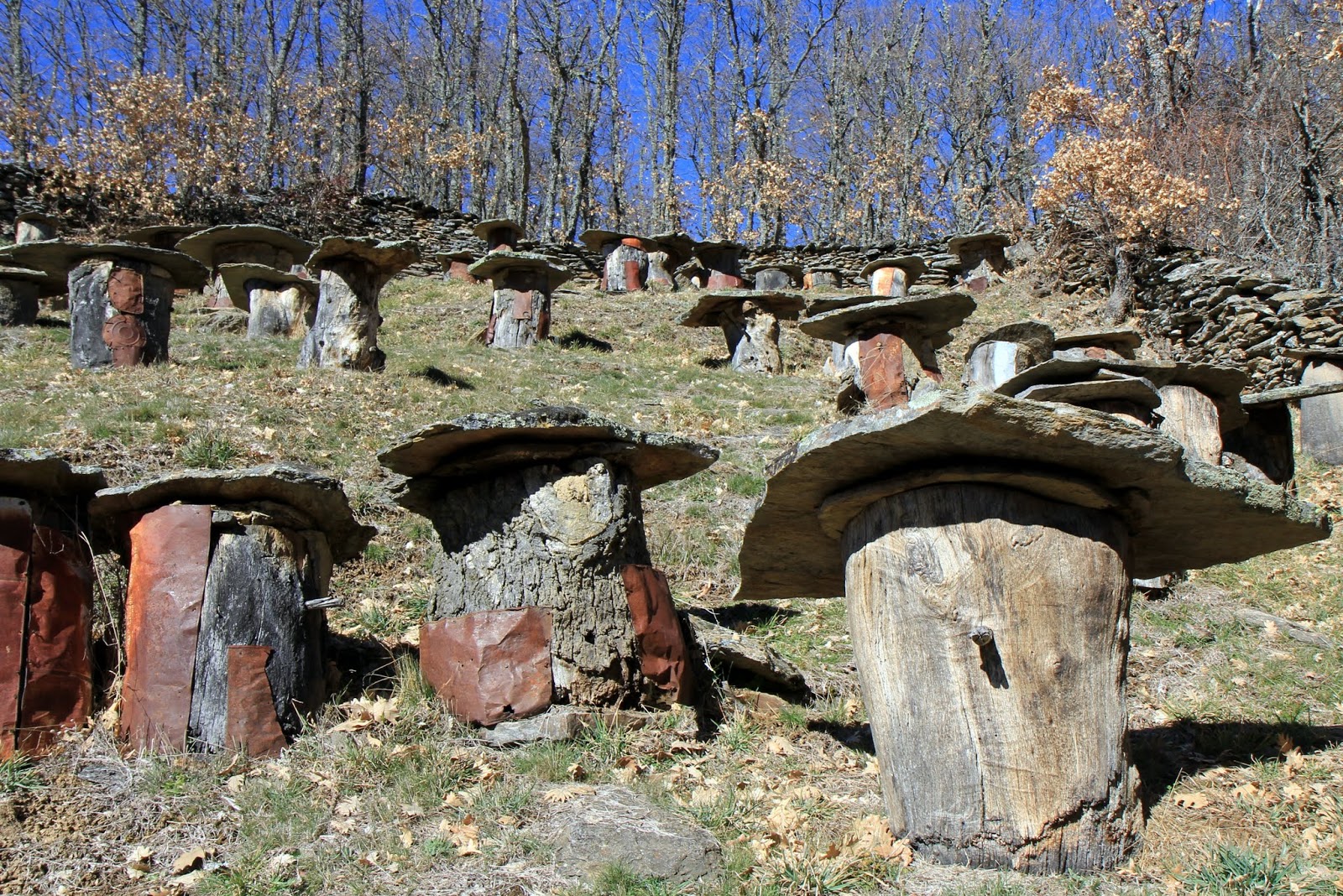 Traditional hiveIt was originally a communal land shared by five beekeeping families. To this day it has not been known to date its antiquity, although the oldest in the place claim that it is more than two hundred years old. The Traditional Colmenar of La Hiruela brings together more than a hundred "corches" (hives built in hollow trunks), divided into rows and streets that allow visitors to pass. |
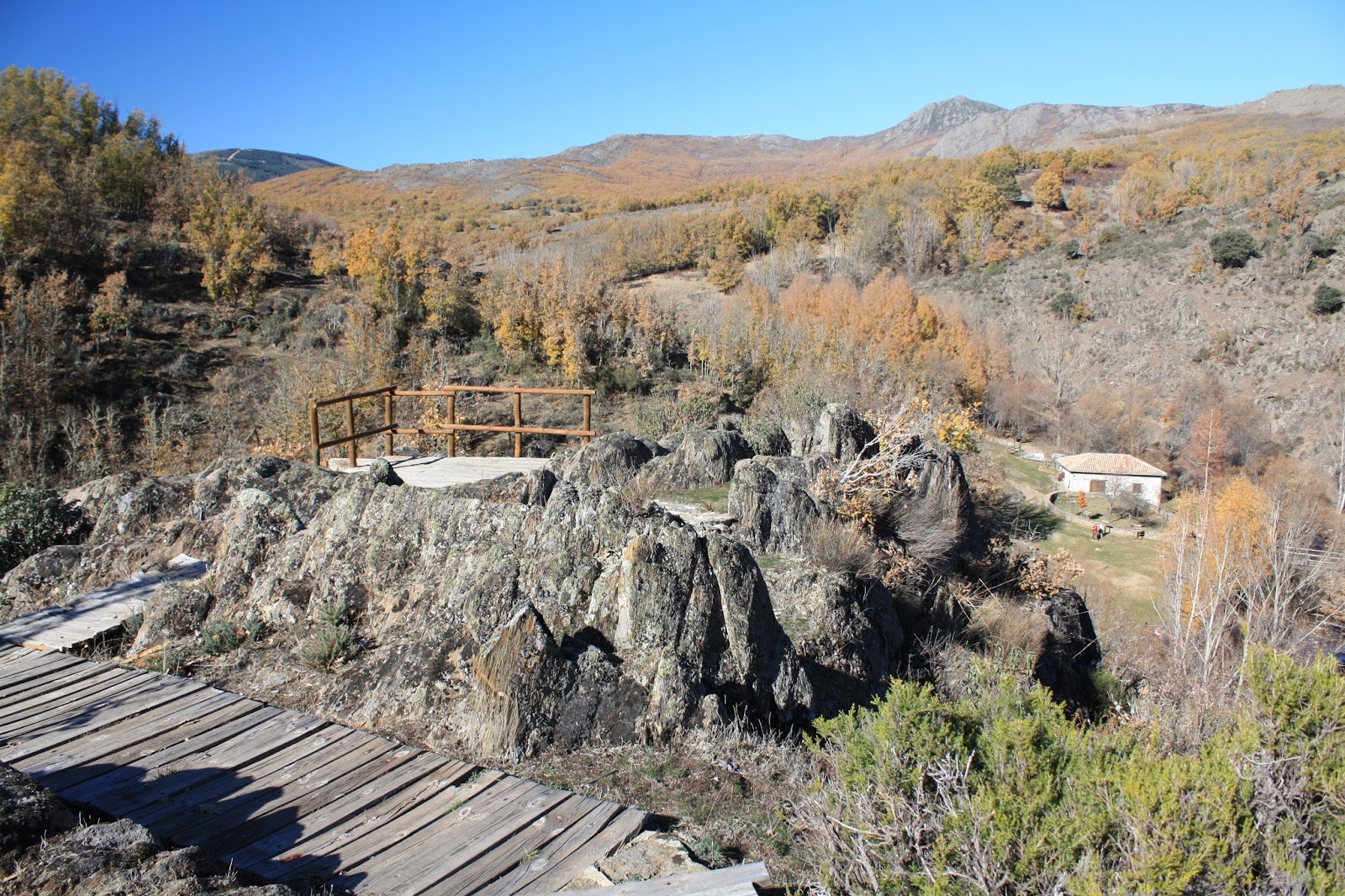 Mirador Molino de La Hiruela |
This path runs along the traditional road that connected La Hirouela with El Cardoso de la Sierra, a road populated by huge oaks, common walnuts and wild cherry trees, until you reach the wooden bridge over the Jarama River. If we cross the river, the traditional road would lead us to El Cardoso, but our route turns right before the bridge, to follow the course of the Jarama between riverside vegetation to reach a wide meadow where the ruins of the Juan Bravo Mill are found, where we can see the great mould stone embedded in the grass. By the bank of the river, there are white alms, willows, birches, chopos or alles. Later on we see another infrastructure associated with the water mills, the caz or channel that brings the water to the mill, and following this we arrive at the flour mill of La Hirouela and its recreational area. In front of the mill, crossing a wooden door we are incorporated into a road that goes up to the village, shortly after the rise begins, there is a variant that leads to a traditional hive, made in hollow trunks and with shale or mud slices as a cover. The road continues to rise under the shadow of large trees, which lead us to the family gardens populated by fruit trees, before arriving again in La Hiruela.
Σύνδεσμοι:garmin.com·https://Garmin International
Γεωγραφικό πλάτος:41.078191·Γεωγραφικό μήκος:-3.454839